Welcome to EastWest Literary Forum, a magazine in English & Russian (and sometimes, Ukrainian)!
People whose grandparents and great-grandparents were wiped out by either Nazism or Stalinism see the world—their inner world and the outer one—differently from those who only read about these horrors in textbooks. For the latter, it’s abstract, or worse, a talking point. For us, it’s bone-deep.
Almost every family in the former Soviet Union lost a parent, grandparent, or great-grandparent to the revolution, Stalinism, or the two world wars. Millions of families were obliterated entirely, leaving no one to remember them. This created a multigenerational trauma on a national scale—one nearly impossible to convey to our Western counterparts. We carry these wounds forward, and they become our present. Though the events happened long ago, they still color how we perceive today and often govern our actions. Many of our reactions—and overreactions—to current events are rooted in those old traumas, carried in us like part of our DNA.
I see this magazine as a platform—a forum, as its name implies—where those of us born in the so-called “East,” or what was once the FSU, can try to explain ourselves to our children born in the West, and to our Western neighbors. And if that self-explanation happens through poems, stories, and paintings, it can be both healing and revealing. But let’s not be too optimistic about it being peaceful or long-lasting. Let’s end this paragraph with “hopefully.”
There is, however, another reason for a journal like this one—let me tell you a parable.
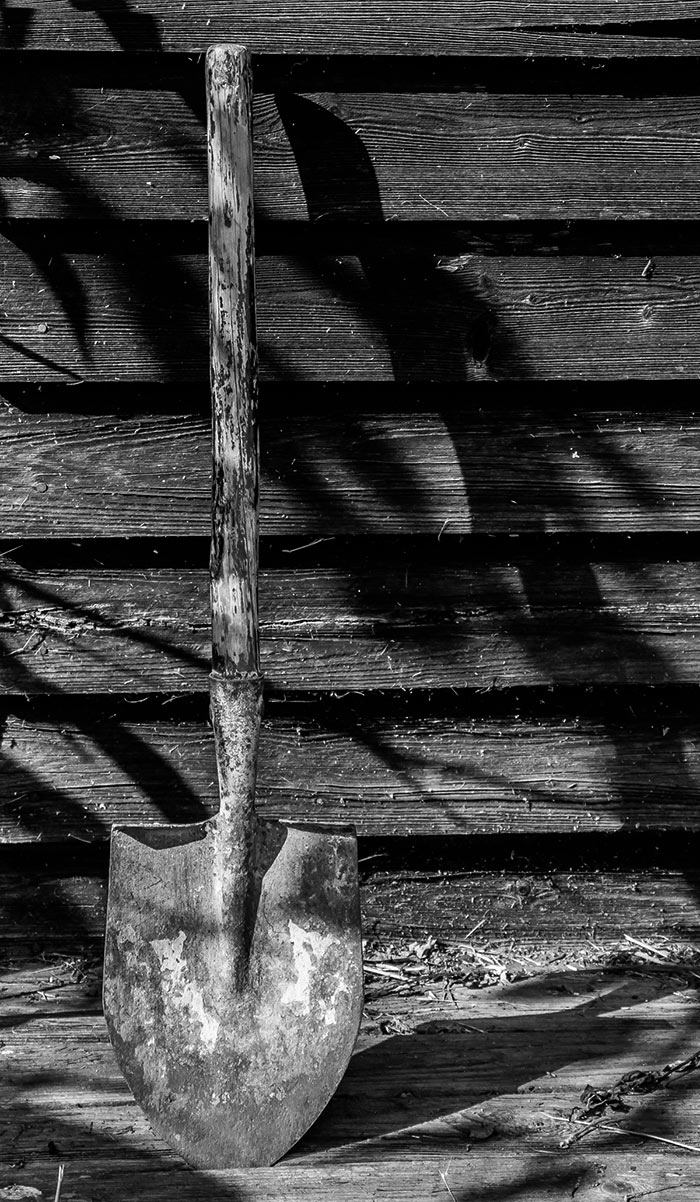
A woman moved to a new home. One day, while cleaning up leaves in her garden, she found a treasure. She took out a shovel, began to dig, and—lo and behold!—the treasure was her native language. The deeper she dug, the more layers of it she uncovered. She started spending every day in the garden, digging and digging. She even stopped going to work, as though she had found real gold there, not just her mother tongue.
This magazine is for those who, living in a bilingual world like the woman in that little story, have found a treasure chest with their language in it. It’s for those who want to dig deeper and uncover more layers—whether it’s their native tongue or an adopted one. I see this bilingual magazine as a meeting place for Russophone and Anglophone writers, poets, and readers.
Since the interests of Russophone writers and readers often differ from those of their Anglophone counterparts, this magazine is for anyone interested in Russian and Eastern European ways of thinking, being in the world, and stepping outside it.
All texts on this site will be published with translations (into English if the original is in Russian, and into Russian if the original is in English). To switch versions, click the red arrow at the top of the page. The only exception: translations of short poems appear on the same page as the original and do not require a click.
Most section titles—Poetry, Prose, Essays, Translations, Art—are self-explanatory. The exception is World, which, like Poetry, is reserved mostly for poems and prose poems, but works placed here must engage with the outside world—something that many hermetic poems lack.
New publications usually appear once a week, though sometimes more often, and sometimes less. We insist on our right to be unpredictable, which includes ignoring traditional expectations, rules, and deadlines.
The opinions expressed in EastWest Literary Forum are those of the individual contributors. Authors retain all rights to their work.
Nina Kossman
Founding Editor of EastWest Literary Forum
New York, July 2021