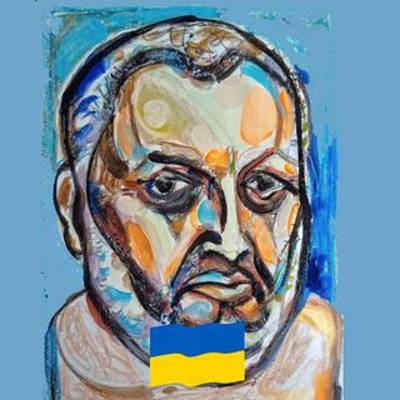
Nikola Sologub
Author Profiles

About the Author:

1. Sologub
Nikola Sologub
Kyiv, Ukraine

Nikola Nikolayovych Sologubov (Nikola Sologub) was born on August 6, 1969 in Kyiv. His father, Mykola Vasyliovych Sologubov (Sologub), was a well-known Soviet artist born in Kyrgyzstan. His maternal grandfather was the Ukrainian Jewish poet Matvey (Motl) Hartsman, who volunteered for the front and was killed in action in 1943. Nikola’s brother is the artist Matvey Weisberg. Nikola studied art at the Kyiv Art School for Gifted Children, specializing in sculpture. However, at the age of 14, he was expelled from the school for bad behavior, and after that, the only school he was allowed to graduate from was a school for the blind and deaf. All of this made it impossible to officially continue art education, therefore he set out to educate himself, studying philosophy and art history. He received his art education from his father. As a child, he painted in his studio on Andriyivsky Descent in Kyiv, and when, in 1989, many new galleries opened in Kyiv, Nikola began to exhibit in them. His artistic career took off immediately.
Bookshelf
Shabalin s book cover
by Sergei Shabalin

A new book of poems by New York poet, journalist, and essayist Sergei Shabalin. In Russian.

Agent Dmitri
by Emil Draitser

Sailor, artist, lawyer, and writer, Dmitri Bystrolyotov was one of a team of Soviet spies operating in the West between the World Wars. He seduced women to learn great secrets of foreign states, but was then arrested and tortured in the Gulag, where he began to document the crimes against humanity of the regime he had served.

Romm
by Michael Romm

This book features biographies of the author’s family members, detailing with the effect of the war on their lives.

book Queen
by Borys Khersonsky. Svetlana Lavochkina and Oksana Rosenblum, translators

The first bilingual collection of Ukrainian verse by Borys Khersonsky. In these poems, heaven is often the setting: Jews who perished during pogroms and in the Holocaust continue with their daily routines, whereas on earth, displacement has become a constant, and collective memory has been cleansed of the Jewish past.

Videos
No data was found