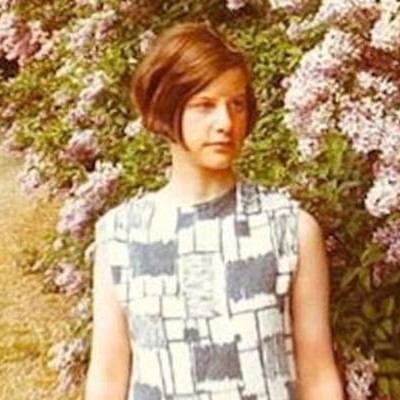
Veronica Forrest-Thomson
Author Profiles

About the Author:

ca00f7c70f044c2d92e478f991456dc98b120aa2
Veronica Forrest-Thomson
Glasgow, Scotland

Veronica Elizabeth Marian Forrest-Thomson (28 November 1947 – 26 April 1975) was a Scottish poet and a critical theorist. Veronica was born in Malaya to a rubber planter, John Forrest Thomson, and his wife, Jean, but grew up in Glasgow, Scotland. She opted to hyphenate her surname, having been published under the name Veronica Forrest initially. She studied at the University of Liverpool (BA, 1968) and Girton College, Cambridge (PhD, 1971). Forrest-Thomson later taught at the universities of Leicester and Birmingham. Forrest-Thomson’s critical study “Poetic Artifice: A Theory of Twentieth-Century Poetry” was published by Manchester University Press in 1978. It was reissued in 2016 by Shearsman Press with notes and an introduction by Gareth Farmer. Her poetry collections included “Identi-kit” (1967), the award-winning “Language-Games” (1971), and the posthumous “On the Periphery” (1976). Subsequent gatherings of her work include Collected Poems and Translations (1990) and Selected Poems (1999). A further Collected Poems, minus the translations, was published in 2008 by Shearsman Books with Allardyce Books.
Bookshelf
Shabalin s book cover
by Sergei Shabalin

A new book of poems by New York poet, journalist, and essayist Sergei Shabalin. In Russian.

Agent Dmitri
by Emil Draitser

Sailor, artist, lawyer, and writer, Dmitri Bystrolyotov was one of a team of Soviet spies operating in the West between the World Wars. He seduced women to learn great secrets of foreign states, but was then arrested and tortured in the Gulag, where he began to document the crimes against humanity of the regime he had served.

Romm
by Michael Romm

This book features biographies of the author’s family members, detailing with the effect of the war on their lives.

book Queen
by Borys Khersonsky. Svetlana Lavochkina and Oksana Rosenblum, translators

The first bilingual collection of Ukrainian verse by Borys Khersonsky. In these poems, heaven is often the setting: Jews who perished during pogroms and in the Holocaust continue with their daily routines, whereas on earth, displacement has become a constant, and collective memory has been cleansed of the Jewish past.

Videos
No data was found