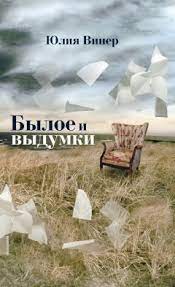
Julia Wiener’s youth coincided with the “Thaw” period, and her maturity – with the years of “Soviet stagnation”, which, in her case, ended with emigration to Israel in the early 1970s. She describes her wartime childhood, her Komsomol-student youth, her subsequent disillusionment, and her meetings with well-known writers in a humorous style and colorful detail. She brings to life colorful characters – from her Moscow communal apartment neighbors to a hippie London lord, or an Arab family, headed by a devotee of classical Russian literature.

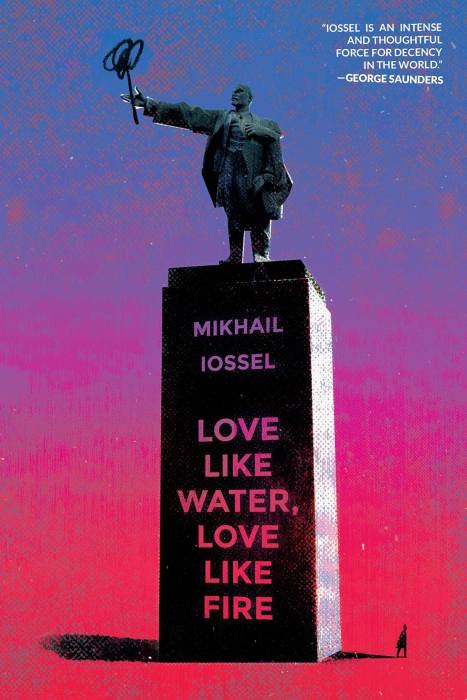
After a century of brooding and talking telepathically to his Mausoleum janitor from his glass coffin, Vladimir Lenin awakens—alive and bewildered in the modern world.
When Clea returns to London with her new Russian husband, she is surprised to see him become even more eccentric.
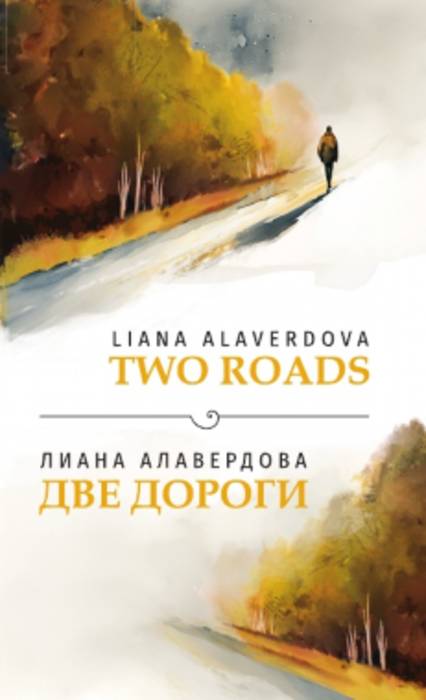
A haunting dystopia some readers have called “the new 1984.” In a society where memory is rewritten and resistance is pre-approved, freedom isn’t restricted; it’s redefined. As systems evolve beyond human control and choice becomes a simulation, true defiance means refusing the script, even when the system already knows you will.
Original poetry by Nina Kossman, accompanied by a selection of poems by Marina Tsvetaeva, translated from Russian by Kossman. “The sea is a postcard,” writes Nina Kossman. There is both something elemental in this vision and—iron-tough.” —Ilya Kaminsky
“13 short pieces…pungently convey the effects of growing up under a totalitarian regime.” —Publishers Weekly
A new book of poems by Nina Kossman. “When the mythological and personal meet, something transforms for this reader…” —Ilya Kaminsky