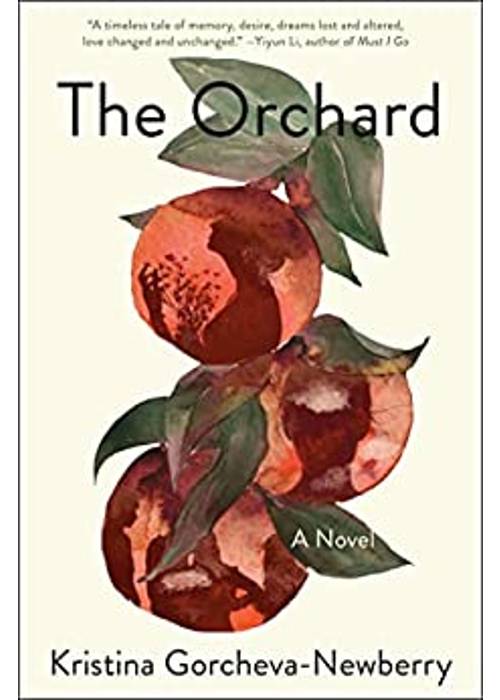
Four teenagers grow inseparable in the last days of the Soviet Union—but not all of them will live to see the new world arrive in this powerful debut novel, loosely based on Anton Chekhov’s The Cherry Orchard.
Coming of age in the USSR in the 1980s, best friends Anya and Milka try to envision a free and joyful future for themselves. They spend their summers at Anya’s dacha just outside of Moscow, lazing in the apple orchard, listening to Queen songs, and fantasizing about trips abroad and the lives of American teenagers. Meanwhile, Anya’s parents talk about World War II, the Blockade, and the hardships they have endured.
By the time Anya and Milka are fifteen, the Soviet Empire is on the verge of collapse. They pair up with classmates Trifonov and Lopatin, and the four friends share secrets and desires, argue about history and politics, and discuss forbidden books. But the world is changing, and the fleeting time they have together is cut short by a sudden tragedy.
Years later, Anya returns to Russia from America, where she has chosen a different kind of life, far from her family and childhood friends. When she meets Lopatin again, he is a smug businessman who wants to buy her parents’ dacha and cut down the apple orchard. Haunted by the ghosts of her youth, Anya comes to the stark realization that memory does not fade or disappear; rather, it moves us across time, connecting our past to our future, joys to sorrows.