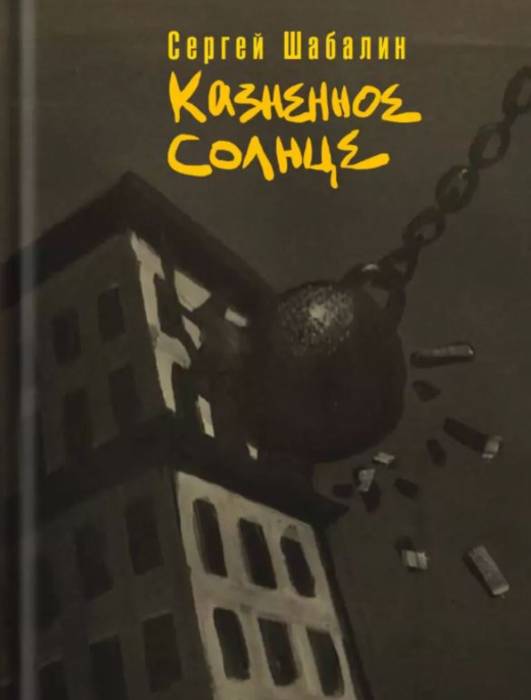
A new book of poems by Sergei Shabalin, the New York poet, journalist, and essayist. His texts present a remarkable combination of surface simplicity and clarity (at the level of syntax and vocabulary, veering now toward the colloquial, now toward the archetypal) with a stratification of meanings, a doubling of perspectives, a rapid shift of optics before the reader has quite had time to grow accustomed. This produces an effect of estrangement: a vision of the world as an integral whole, inaccessible to the eye in its essence, blurred in the impressionist manner in its details, yet striking in its broader sweep.
“Shabalin is bold with words, sometimes ironic, but he doesn’t shy away from speaking his mind…”
—Alexander Eremenko, poet (1950–2021)
“These texts feature a remarkable combination of simplicity and clarity of expression on the surface (at the level of syntax and vocabulary—sometimes leaning toward the everyday, sometimes toward the archetypal)—coupled with layered meanings, dual perspectives, and instant shifts in viewpoint that the reader barely has time to get used to…”
–Gennady Katsov, poet, essayist
“Shabalin is an attentive chronicler of everyday life with a gift for subtle irony. His ‘private individual’ emerged from the poetics of the 1970s… He is devoid of grand illusions, holds a low opinion of himself and of humanity in general, yet at the same time diligently and touchingly creates small illusions…”
–Vladimir Kozlov, poet, literary critic
“Sergei Shabalin’s poems are not pure poetry steeped in autumn, languor, or death. They are stories, situations, and passions—set against the backdrop of the country’s current state… They are compelling both for their pain and for their narrative.”
–Alexander A. Pushkin, poet