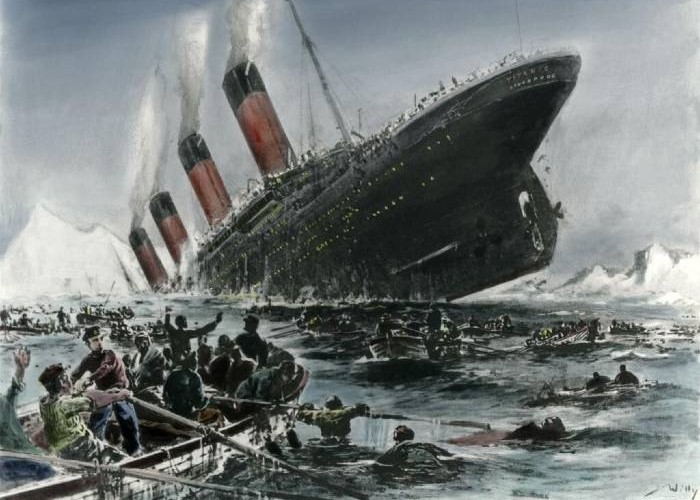
(Lines on the loss of the “Titanic”)
I
In a solitude of the sea
Deep from human vanity,
And the Pride of Life that planned her, stilly couches she.
II
Steel chambers, late the pyres
Of her salamandrine fires,
Cold currents thrid, and turn to rhythmic tidal lyres.
III
Over the mirrors meant
To glass the opulent
The sea-worm crawls — grotesque, slimed, dumb, indifferent.
IV
Jewels in joy designed
To ravish the sensuous mind
Lie lightless, all their sparkles bleared and black and blind.
V
Dim moon-eyed fishes near
Gaze at the gilded gear
And query: “What does this vaingloriousness down here?”
VI
Well: while was fashioning
This creature of cleaving wing,
The Immanent Will that stirs and urges everything
VII
Prepared a sinister mate
For her — so gaily great —
A Shape of Ice, for the time far and dissociate.
VIII
And as the smart ship grew
In stature, grace, and hue
In shadowy silent distance grew the Iceberg too.
IX
Alien they seemed to be:
No mortal eye could see
The intimate welding of their later history,
X
Or sign that they were bent
By paths coincident
On being anon twin halves of one august event,
XI
Till the Spinner of the Years
Said “Now!” And each one hears,
And consummation comes, and jars two hemispheres.
1912
===========
Обоюдное стремление
I
Гигантская жемчужина, на дне
Лежащая, в холодной глубине
От вызвавшей её людской гордыни всей толщей вод отделена вполне.
II
Не бьётся саламандрой, не горит
Огонь в остывших топках. Перебит
Её хребет. Приливные потоки воспроизводят в ней извечный ритм.
III
По зеркалу, что отражало тех,
Кто воплощал богатство и успех,
Слепой морской червяк ползёт нелепо, тупой и скользкий, как холодный грех.
IV
Гранённый для сверкания алмаз,
Что тешил самый изощрённый глаз,
Лишённый света – от морского камня неотличим, он чёрен, он угас.
V
В пространстве раззолоченных кают,
Как тени, рыбы странные снуют –
Вопрос застыл в глазах луноподобных: «Что делает вся эта роскошь тут?»
VI
Так вот: покуда строилась она,
Голубка моря, грации полна,
Зрел замысел у Имманентной Воли, что правит всем в любые времена.
VII
И где-то вдалеке мужал и рос
Неграциозный ледяной утёс,
Не ведавший пока, что он ей пара, не знавший про корму её и нос.
VIII
Не зная о красавице морей,
Он рос в объёме, делался страшней,
Не близок к ней ни точностью, ни блеском, он рос, тот Айсберг, параллельно с ней.
IX
И смертный, как бы ни был он умён,
Не мог понять их общности закон –
Интимную их связанность в пространстве непостижимых будущих времён,
X
Где – чуждые, насколько быть могли
Две чуждых сути, что произошли
От разных сил – они соединятся и потрясут сознание Земли.
XI
Когда Ведущий им сказал: «Сейчас!»,
Они услышали. То был приказ.
Они слились – две половинки шара. Они соединились. Свет погас.