Warbler
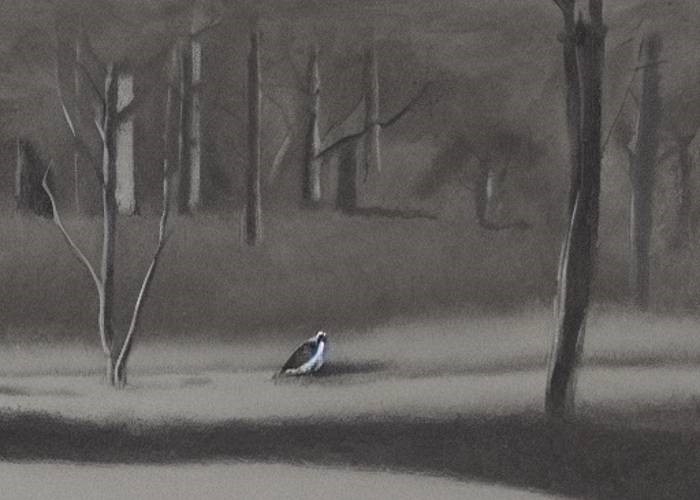
Where the birch trees are crowded
Far away from the torment and plight,
Where the morning is shrouded
In a rosy, unwavering light,
And where leaves roll along
Like a clear-crystal wave from up high
Sing me, warbler, a wasteland-wide song,
Sing a song of my life.
Flying over a woodland,
Seeing people below in the glade,
It’s a simple and wooden
Inconspicuous whistle you’ve made,
Like a breeze from the forest,
When you visit us here in our home,
With your matins so meek and so modest
We can start out morn.
But in life we are soldiers all,
At the edge of intelligent concepts,
Atoms split and explosives fall,
Sweep up houses like snowstorms.
All around us the war
Spins its sails like a windmill maniacal,
Woodland hermit, my warbler,
Why, my friend, are you quiet now?
By explosions surrounded,
Over streams, where the rushes grow high,
Over crags, over ground,
Over death and its wreckage you fly.
You are silent now, wanderer
You are seeing me off into battle,
Clouds gather, all heavy and ponderous,
Looking deadly.
Over all the great rivers, and higher,
Sun will rise, by the morning mist chilled,
Eyelids singed off by fire,
I’ll be hugging the ground here, killed.
Like a furious raven,
A machine gun will rattle with noise,
In my heart, be it ruptured and riven,
It will sing then, your voice.
Where the birch trees still sway
Over that birchwood glade, in the sky
Where a rose-coloured wave
Crashes down from the branches up high,
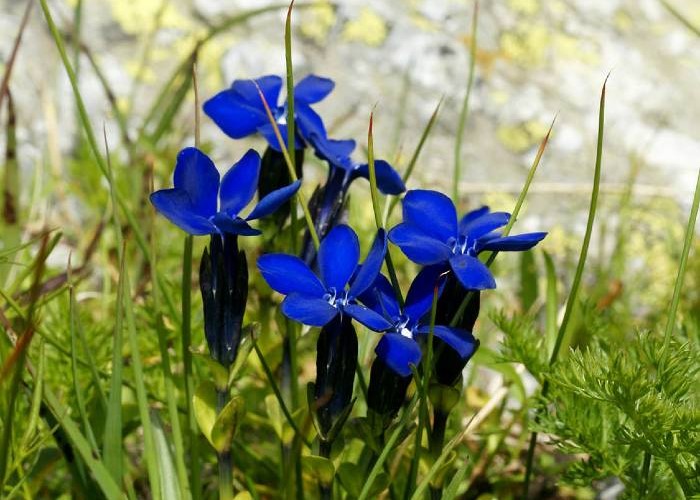
Where a flower is frozen and glittering
In the dew, like a tear from the skies,
Dawn will rise of a wonderful victory
For all times.
Translated from the Russian by Polina Sparks
Farewell to Friends
In those long jackets, broad-brimmed hats of yours,
With notebooks of your poems in your hands,
You’ve long since turned to ashes and dispersed
Like lilac branches bared by autumn winds.
You’re in the land that knows no premade molds,
Where everything’s disjointed, mixed, disturbed,
Where there’s no heavens but sepulchral vaults,
And fixed forever is the lunar orbit.
A synclite of the silent insects sings
There in a strange, unfathomable language,
A little beetle-man comes in and brings
A greeting for his friends, holding his lantern.
Do you rest peacefully, my comrades, friends?
Have you forgotten all our common past?
Your brothers now are blades of grass, and ants,
Sighs, yellow chicks, and little whirls of dust.
Your sisters now are twigs and ash seed wings,
Nipples of lilacs, dandelion puffs…
And there’s no memory left in your tongues
To call your brother who has stayed above.
There is no place for him yet on those shores
Where your light shadows disappeared, my friends,
In those long jackets, broad-brimmed hats of yours,
With notebooks of your poems in your hands.
Translated from the Russian by Dmitri Manin
Circassian Girl
When the translucent bulk of dawn
burdens the air above the ground
and gabled eagles soar and glide
around the peak shaped like a church bell,
faceted trees steadily tramp
like nomads to their magic camp;
the peak clangs with its hollow bangles
and stands there glowing like a candle;
and farther up, the old Elbrus
sways its lush summit graciously,
prepares Turkish delight for us
and brews for us a cup of tea.
Then the entire Caucasus floats
in, a giant five-teated mass,
as though a festive party boat
through Leningrad’s stately abyss,
and there sings a Circassian girl
before a samovar-shop window;
and Tula styles her foxtrot curls,
Tambov fashions her fancy boots,
but the Terek thrashes in her breast,
it bellows through her tattered lips, —
and she falls down, a lifeless corpse,
hands clutched, arms making a triangle.
Aragva-like, flows the Neva
and gives the glory to the stars:
they built a wreath of heavy lead
to crown this little body, dead
under the quicklime… God forgive her!
The wreath sways slowly up above her,
and the Putilov moon caught by
the violent stream, is all awry.
And there I stand, white in the light,
I peer into the pitch-black sea,
the world goes double in my eyes,
splits into two enormous boots:
one of them treads on Mount Elbrus,
the other speaks in the Finnish tongue,
in giant steps they run together
rumbling eastward across the sea.
Translated from the Russian by Dmitri Manin
T h e O r i g i n a l s
Иволга
В этой роще берёзовой,
Вдалеке от страданий и бед,
Где колеблется розовый
Немигающий утренний свет,
Где прозрачной лавиною
Льются листья с высоких ветвей, —
Спой мне, иволга, песню пустынную,
Песню жизни моей.
Пролетев над поляною
И людей увидав с высоты,
Избрала деревянную
Неприметную дудочку ты,
Чтобы в свежести утренней,
Посетив человечье жильё,
Целомудренно бедной заутреней
Встретить утро моё.
Но ведь в жизни солдаты мы,
И уже на пределах ума
Содрогаются атомы,
Белым вихрем взметая дома.
Как безумные мельницы,
Машут войны крылами вокруг.
Где ж ты, иволга, леса отшельница?
Что ты смолкла, мой друг?
Окружённая взрывами,
Над рекой, где чернеет камыш,
Ты летишь над обрывами,
Над руинами смерти летишь.
Молчаливая странница,
Ты меня провожаешь на бой,
И смертельное облако тянется
Над твоей головой.
За великими реками
Встанет солнце, и в утренней мгле
С опалёнными веками
Припаду я, убитый, к земле.
Крикнув бешеным вороном,
Весь дрожа, замолчит пулемёт.
И тогда в моём сердце разорванном
Голос твой запоёт.
И над рощей берёзовой,
Над берёзовой рощей моей,
Где лавиною розовой
Льются листья с высоких ветвей,
Где под каплей божественной
Холодеет кусочек цветка, —
Встанет утро победы торжественной
На века.
1946
~
Прощание с друзьями
В широких шляпах, длинных пиджаках,
С тетрадями своих стихотворений,
Давным-давно рассыпались вы в прах,
Как ветки облетевшие сирени.
Вы в той стране, где нет готовых форм,
Где всё разъято, смешано, разбито,
Где вместо неба – лишь могильный холм
И неподвижна лунная орбита.
Там на ином, невнятном языке
Поет синклит беззвучных насекомых,
Там с маленьким фонариком в руке
Жук-человек приветствует знакомых.
Спокойно ль вам, товарищи мои?
Легко ли вам? И всё ли вы забыли?
Теперь вам братья – корни, муравьи,
Травинки, вздохи, столбики из пыли.
Теперь вам сестры – цветики гвоздик,
Соски сирени, щепочки, цыплята…
И уж не в силах вспомнить ваш язык
Там наверху оставленного брата.
Ему еще не место в тех краях,
Где вы исчезли, легкие, как тени,
В широких шляпах, длинных пиджаках,
С тетрадями своих стихотворений.
~
Чeркешенка
Когда заря прозрачной глыбой
придавит воздух над землей,
с горы, на колокол похожей,
летят двускатные орлы,
идут граненые деревья
в свое волшебное кочевье;
верхушка тлеет, как свеча,
пустыми кольцами бренча,
а там за ними, наверху,
вершиной пышною качая,
старик Эльбрус рахат-лукум
готовит нам и чашку чая.
И выплывает вдруг Кавказ
пятисосцовою громадой,
как будто праздничный баркас
в провал парадный Ленинграда,
а там черкешенка поет
перед витриной самоварной,
ей Тула делает фокстрот,
Тамбов сапожки примеряет,
но Терек мечется в груди,
ревет в разорванные губы —
и трупом падает она,
смыкая руки в треугольник.
Нева Арагвою течет
а звездам слава и почет:
они на трупик известковый
венец построили свинцовый
и спит она… прости ей бог!
Над ней колышется венок,
и вкось несется по теченью
луны путиловской движенье,
И я стою — от света белый,
я в море черное гляжу,
и мир двоится предо мною
на два огромных сапога —
один шагает по Эльбрусу,
другой по-фински говорит,
и оба вместе убегают,
гремя по морю на восток.