Boris Pasternak. My Sister—Life. Translated by Blue Montakhab

Also in Translations:

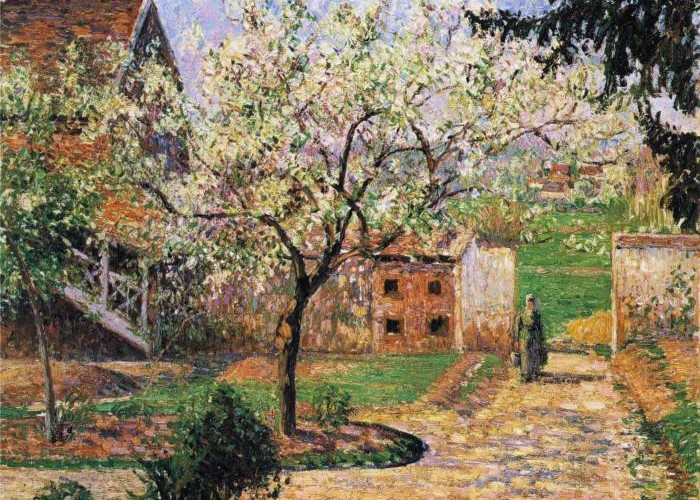
Camille_Pissarro_-_Flowering_Plum_Tree,_Eragny (1)
Camille Pissarro. "Flowering Plum Tree. Eragny." 1894 (fragment)
Boris Pasternak. My Sister—Life. Translated by Blue Montakhab

 
Life—my sister—is spilling out everywhere

flooding the area with heavy spring rain.

The passengers in gaudy trinkets are peeved.

Their speech stings politely like snakes in the grain.
 

The elderly have good reasons to be grumpy.

Equally foolish no doubt are your own,

that the storm makes pretty lilac eyes shine

and brings the smell of reseda bushes up from below.
 

In May when you are riding the Kamyshinsky line,

the schedule seems as august as holy scripture

or the grand leather seats dark with dust and grime.

You could read and reread it all day in rapture.
 

The brakes screech jarringly and a sleepy peasant,

done in by the region’s cheap local wine,

shoots upright from his mattress. Is the next stop mine?

The sunset and I find such interruptions unpleasant.
 

Sorry, not yet. The third warning bell sounds.

Now the window shutters are pulled down

against the scorching night and the terrain between

running board and sky vanishes from the scene.
 

Some heads are still blinking and tossing about.

I see the face of my mistress, a mirage in the sky.

Meanwhile my wakeful heart pours itself out

like the patches of light the train scatters behind.
 
Summer 1917
 
 
Сестра моя — жизнь
 
Сестра моя — жизнь и сегодня в разливе

Расшиблась весенним дождем обо всех,

Но люди в брелоках высоко брюзгливы

И вежливо жалят, как змеи в овсе.

 
У старших на это свои есть резоны.

Бесспорно, бесспорно смешон твой резон,

Что в грозу лиловы глаза и газоны

И пахнет сырой резедой горизонт.
 

Что в мае, когда поездов расписанье

Камышинской веткой читаешь в купе,

Оно грандиозней святого писанья

И черных от пыли и бурь канапе.
 

Что только нарвется, разлаявшись, тормоз

На мирных сельчан в захолустном вине,

С матрацев глядят, не моя ли платформа,

И солнце, садясь, соболезнует мне.
 

И в третий плеснув, уплывает звоночек

Сплошным извиненьем: жалею, не здесь.

Под шторку несет обгорающей ночью

И рушится степь со ступенек к звезде.

 
Мигая, моргая, но спят где-то сладко,

И фата-морганой любимая спит

Тем часом, как сердце, плеща по площадкам,

Вагонными дверцами сыплет в степи.


1917

About the Author:

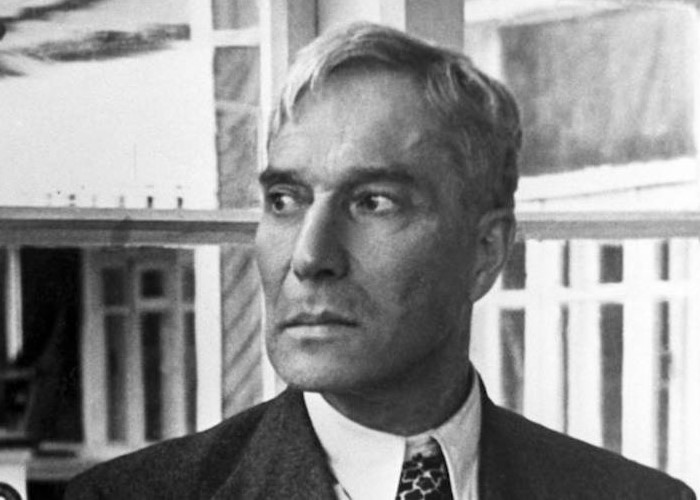
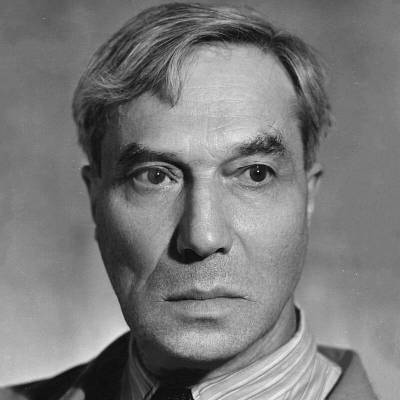
Boris_Pasternak_1959_photo
Boris Pasternak
Moscow, Russia

Boris Leonidovich Pasternak (10 February [O.S. 29 January] 1890 – 30 May 1960) was a Russian poet, novelist, composer, and literary translator. Pasternak’s first book of poems, My Sister, Life, was published in Berlin in 1922. Pasternak’s translations of stage plays by Goethe, Schiller, Calderón de la Barca, and Shakespeare remain very popular with Russian audiences. Pasternak was the author of Doctor Zhivago (1957), a novel that was rejected for publication in the USSR. The manuscript was smuggled to Italy and was first published there in 1957. Pasternak was awarded the Nobel Prize in Literature in 1958. The award enraged the Communist Party, which forced him to decline the prize. Doctor Zhivago has been part of the main Russian school curriculum since 2003

Boris Pasternak Борис Пастернак
Bookshelf
629285321_1293200506022560_7049761535591991609_n
by Zinovy Zinik

When Clea returns to London with her new Russian husband, she is surprised to see him become even more eccentric.

Naza s book
by Naza Semoniff

A haunting dystopia some readers have called “the new 1984.” In a society where memory is rewritten and resistance is pre-approved, freedom isn’t restricted; it’s redefined. As systems evolve beyond human control and choice becomes a simulation, true defiance means refusing the script, even when the system already knows you will.

behind_the_border-cover
by Nina Kossman

“13 short pieces…pungently convey the effects of growing up under a totalitarian regime.”                       .—Publishers Weekly

Other Shepherds: Poems with Translations from Marina Tsvetaeva by Nina Kossman
by Nina Kossman

Original poetry by Nina Kossman, accompanied by a selection of poems by Marina Tsvetaeva, translated from Russian by Kossman. “The sea is a postcard,” writes Nina Kossman. There is both something elemental in this vision and—iron-tough.”
—Ilya Kaminsky

Videos
No data was found