A woman named Zaina lived in our courtyard, and you could buy a night with her. Not necessarily for money.
In difficult times for the motherland, she let Chechen fighters into her home, and hung the Ichkerian flag in her apartment window as a sign of recognition. The flag was beautiful, green, with a fluffy wolf in the middle.
Zaina charged little for her services: a bowl of flour and a jar of pickles.
After her guests left her quarters, Zaina would put on a headscarf to cover her red curls, and hurry to share some of the food she had earned with the children and old people who lived in the neighborhood.
When enemy forces in the form of Russian soldiers advanced and the militants were forced to leave their territories, Zaina welcomed the invaders with the same cordiality.
Russian men brought Zaina canned meat and jam in small jars, and after they left, she did what she was used to doing: she shared the food with disabled people and large families.
Therefore, despite constantly whispering behind her back, calling her a whore and, in general, not seeing her as a human being, our entire neighborhood was tolerant toward Zaina.
Most of the male population used her services: such women are extremely rare in Chechnya, because this kind of behavior is punishable by death.
A Muslim woman like Zaina would be killed by her brother, uncle, or father. No one would ever condemn the killers. On the contrary, they would enjoy universal respect and admiration among the people, and the police would come to shake their hands and say loudly, “Assalamu alaikum!”
But Zaina had no relatives. She had no father, no mother, no brothers or sisters who would kill her, or would try to protect her from such a life.
It was known that she was born in the mountains of Dagestan, spoke Chechen, and changed the flags on her windows according to territorial changes in the Russian Federation. Even her age was a mystery. With their experienced eyes, the local righteous women estimated her to be in her forties.
“She’s beautiful because she hasn’t given birth to any children!” said the malicious gossips in their long dresses and robes.
Their faces were distorted, as if in a glass that had been shattered by a man’s hand and cracked lengthwise and crosswise. Zaina wore pants, the only one in the whole town. This was also considered an unheard-of disgrace.
No one would allow Zaina to give birth to a child: according to local traditions, such a woman was unworthy of carrying a child in her womb.
In ordinary families, by the age of forty, a woman was considered old. How could it be otherwise? Eight or nine children. She had to get married at fifteen, which meant that by the age of thirty-something, she was already a grandmother.
A different concept of time, of youth. Different customs. Mountain customs.
The beautiful Zaina survived the harsh times of Sharia persecution: anyone else would have been shot, of course, or stoned or beaten with sticks, but not her.
Strict Muslim preachers wandered into our yard to investigate, but when they saw the blue-eyed, laughing Zaina, they began to smile in response and disappeared into her small apartment for several hours.
Thin as a miniature statue, the beauty bewitched them at first sight. She loved dancing and music. She cooked oriental dishes quickly and deliciously.
Leaving the prostitute’s apartment, the preachers tried to get away as quickly as possible, so that people would not notice their long beards and start making indecent jokes about them.
“Everyone knows everything about everyone here!” Aunt Maryam said once. “Who came from where, who looked at whom, why…”
“How did Zaina appear in our yard?” I asked, looking at the red-haired giggler from the kitchen window, where my neighbor Maryam and I were cooking pilaf.
“Ramses brought her. He found her somewhere. She was happy, thinking that he might marry her. But his relatives forbade him to even think about it! And if a man’s family doesn’t give their consent, no one will go against their will.”
Ramses was Chechen, our neighbor from the second floor. He lived with Zaina for a while as his concubine, then passed her on to his friends, like a pack of cheap cigarettes.
Zaina was given someone else’s apartment, from which a Russian family had fled during turbulent times, and she lived in this apartment as if it were her own. Ramses sometimes greeted her if he was sure that none of the neighbors could see him. But of course, this never happens in Chechnya: everyone has eyes like saucers.
There’s a special custom in Chechnya: to leave doors unlocked. Even if there is a lock on it, locking it is useless. No one knocks, they just come in. They are neighbors, after all!
“Aunt Maryam, we need an iron!” The Avar girls ran down from the upper floor and, without waiting for the owner of the iron to say anything, grabbed the item and carried it away.
The door slammed shut…
“It’s me. I’ve come for water!” Old Ahmed rumbled, carrying buckets passed us on his way to the bathroom.
“Maryam, I’ll leave my bag in the hallway,” someone unseen shouted. “My brother will come and pick it up in an hour!”
From the voice, we guess that it is our neighbor Zalina from the house across from ours.
And so it went on all day.
“When we moved in,” my mother recalled, cutting onions for pilaf, “we didn’t lock the door at all. Only if we went to the store and no one was home. You get tired of opening it: they knock every five minutes. Children and adults! They would run in, ask how we were doing, bring food, or ask for something. I have never lived anywhere so harmoniously! I loved this custom with all my heart.
I must admit, I did not share my mother’s enthusiasm. It seemed to me that everyone should enjoy peace and quiet, that everyone should have their own space, but, afraid of getting a beating, I hid my thoughts deep inside.
The pilaf turned out to be amazing that summer day, and the adults decided to treat Zaina, who was doing something near her street door.
Zaina behaved quietly in other people’s house, and only when asked her a question, would she begin to tell funny stories, as if her whole life was one endless celebration, while everyone else was tormented by war and sadness.
“Oh, how stupid I was,” Zaina said with a smile. “In my youth, I used to forget to close the door. Just as my guest was getting ready for earthly pleasures, taking off his pants, my neighbor would appear at the doorstep and run in without knocking, to ask for sugar or salt. One poor gentleman from the ministry was so frightened when he saw his aunt that he hit his back against the table… Something inside him cracked. And his friends carried the poor man away on a stretcher, while his aunt ran after them and beat the unfortunate man with her socks…”
“How did you end up with such a life?” my mother wondered. “Someone must have deceived you. You must have fallen for a scoundrel. Or did you get married, divorced, and your family didn’t take you back?”
But Zaina just laughed and said nothing about her youth.
During the Second Chechen War, which was actually the Third, Zaina again hung a flag with a wolf on her window.
By late autumn, the flag was riddled with shrapnel, but she didn’t take it down because she didn’t have a new one. Shells were exploding right outside the entrance, and we waited for a lull to run out and collect snow for drinking.
Once, the shooting was so intense that it seemed as if the shells were falling on the houses in a continuous stream and would wipe out our homes along with us. What does a person feel at such a time, suffocating from the whitewash falling from the walls and ceiling?
The explosions shake the house like a six-point earthquake, and it trembles like a beaten dog. And you lie inside this structure on the wooden floor, remembering moments from your life. You try to paint over the black wasteland of darkness that engulfs all living things.
At the moment of this shelling, a husband and wife were on the neighboring street: Ahmed the Chechen and his Russian wife Irina had been living together for thirty-five years. At first, before the First War, no one knew which of them was of which nationality—there was never any talk of such things. All they knew was that their only son had died in a car accident.
And then it suddenly turned out that Ahmed’s grandfather’s wife was Russian. After this discovery, some neighbors began to ask sarcastically whether he would kick her out. But after receiving a bucket of slop from Ahmed’s grandfather, or a blow to the neck with a crutch, they fell silent and greeted him respectfully when they met.
Their street, consisting of private houses, changed hands: the militants, with their portable cannon, retreated behind the garages, and Russian soldiers drove up in armored personnel carriers, opening fire with all kinds of weapons. The old people couldn’t put out the fire in their house and hid in the hallway, where the walls were stronger.
Zaina lay in the snow, unable to reach the basement door where she wanted to hide: she couldn’t raise her head and crawl on all fours because of the heavy shelling. The woman saw that the old couple’s house was on fire, but it was impossible to call for help amid such noise. No one could hear anything, including their own words.
Old Irina suddenly appeared on the doorstep in her burning robe. She shouted something, waving her arms, and disappeared back into her small burning house.
An armored personnel carrier aimed its gun at the house. Soldiers jumped out of the military vehicle and started shooting at the old couple’s house with automatic weapons, assuming that the militants were probably firing from there.
The people in the basement saw what was happening through a small hole in the wall and froze, realizing that the old couple was about to die. At that moment, Zaina jumped up and, ignoring the shells that were exploding nearby, ran toward the armored personnel carrier.
“Stop! There are people living there!” she shouted. “Don’t shoot!”
Huddled against the hole in the wall, the surviving residents of our houses could not believe what was happening. In her usual trousers and a light jacket left open, having lost her scarf in the commotion, Zaina shielded the burning house with her own body.
Her red hair fell in large curls onto her thin shoulders, her blue eyes burned, and she looked extraordinarily beautiful in the midst of this hell.
The Russian soldiers even stopped shooting in surprise, and the militants with their cannon fell silent behind the garages.
Zaina rushed into the house and pulled out her grandfather Ahmed, who was choking on the smoke, and then her grandmother Irina, who had managed to throw off her burning robe and was now wrapped in an old dark green coat.
“Do people live here?!” the soldiers asked each other in bewilderment.
Then one of them approached the elderly couple and shouted:
“Where are your documents?”
“There!” Grandmother Irina pointed to the crackling black skeleton. “If you want to look for them, feel free to go right there!”
Taking advantage of the lull, Ahmed, Irina, and Zaina hurried to the basement. No one stopped them.
The Russian soldiers and militants kept on fighting.
After a while, news of the brave deed of the corrupt woman spread throughout the courtyards.
“You are so brave!” people said when they met Zaina, and when they turned away, they whispered: “Everyone knows what she is anyway. One good deed won’t change the story of her youth.”
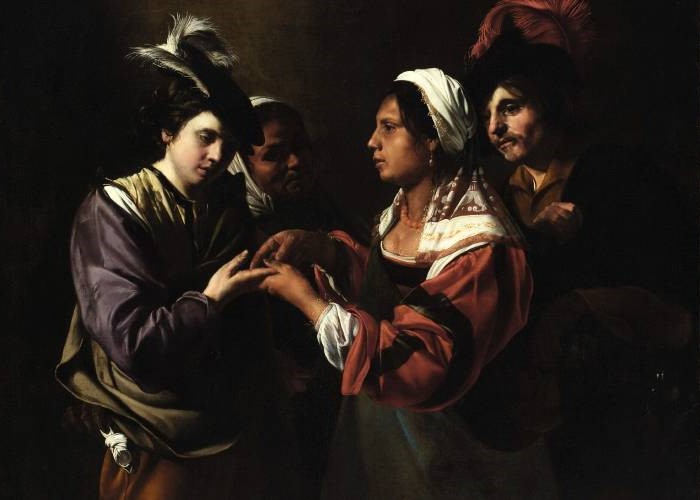
Zaina continued singing songs and laughing, and one day she came to my mother to tell her fortune with cards.
My mother hadn’t read cards in a long time, but Zaina persuaded her. She said it was a matter of life and death.
“Tell me, will I die young? I don’t want to live to old age!” Zaina insisted. “An old woman lives out her life surrounded by her grandchildren, but what kind of old woman am I? It won’t work for me! It’s not something I can do!”
Mom spread the cards out in a fan and looked at them carefully.
“I see that your life has been hard. But everything will pass. Things will change. You will meet a good man. And you will have a house, and you will be old, and you will have grandchildren and great-grandchildren.”
“It can’t be true!”
“It’s true! My cards have never lied to me before. Because of you, I sinned by doing this; I promised not to tell fortunes anymore.
Zaina was lost in thought. “Will I really have grandchildren?”
“Really. I see a little boy, but not your son, your grandson. He will love you very much. You will play with him! And a girl in a pink dress. A tiny baby… Wait a minute, are you pregnant?!”
Zaina took a bite of the cookie that was lying next to her on the chair. And then we noticed that she was crying. She immediately began to smile through her tears so that no one would think badly of her. She hid behind a glass of water.
“Would you like me to read you my poems?” I asked.
Noise passing through the silence.
Time that does not exist.
Someone, for some reason, invented war
A hundred thousand years long.
Someone, for some reason, gave names
And divided the centuries.
In a world where there is always war,
The clouds are cursed.
Everyone born drew a ticket,
And each of us will die.
You choose — to go into the light
Or fall onto the ice.
A hush fell.
“Get out of here!” my mother said to me. “Russia ha many poets who lived and wrote better than you, and they all died in poverty. No one needs your poems.”
“I just wanted to…”
“Thank you!” said Zaina. And she smiled. Then, embarrassed, she added: “I was married off at thirteen, I didn’t know anything about life. I tried to please my elders. They beat me. My husband broke my ribs for disobeying him—he didn’t like the way I answered a neighbor. I was in a hospital. I lost my baby… I remember my husband kicking me, and his sisters and mother were in the other room. No one came to my aid. And I kept screaming, “I don’t love you! I never loved you!“ Then I lost consciousness… I didn’t return to my family after the hospital; I ran away. I didn’t forgive them. I’ve been in hiding ever since. My real name is Aminat.”
”We won’t tell anyone!“ my mother said immediately, looking at me intently.
”Now that my life is over, it won’t change anything.”
“The cards say that everything will be fine for you. The first half of your life was darkness, and the second half of your life will be light.”
Zaina stayed a little longer and then left.
Weeks passed. Neighbors asked each other, “Where did our laughing girl go?” No one knew.
Busy with our own lives, we, too, began to forget her golden-red curls and blue eyes, until one day we saw Irina and Ahmed, the old couple, at the market.
They had moved to the village to live with distant relatives and rarely appeared in the city.
“Zaina is gone!” we reported.
The old man sighed but changed the subject. The old woman couldn’t hold back and said:
“Zaina changed her name and had a baby. These are uncertain times. But there is something good about them: you can get lost and start a new life. We supported her as best we could.
The old couple went to their car, after wishing us a safe journey home without being shot at.
____________________
From the author: “The story “Zaina” is about our neighbors, people who lived in our courtyard in Grozny, Chechnya, and went through the war with us.”
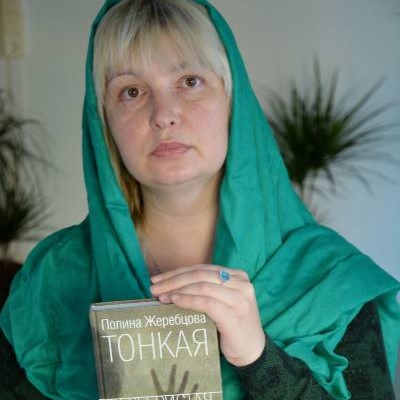
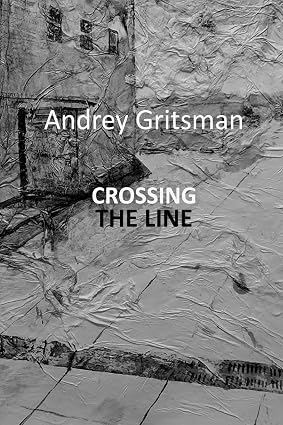
This story is included in the collection “A Thin Silver Thread,” published by Sandermoen, a Russian-language publishing house in Switzerland, and is available worldwide in print and electronic formats, as are the author’s other books.