The Penultimate Day
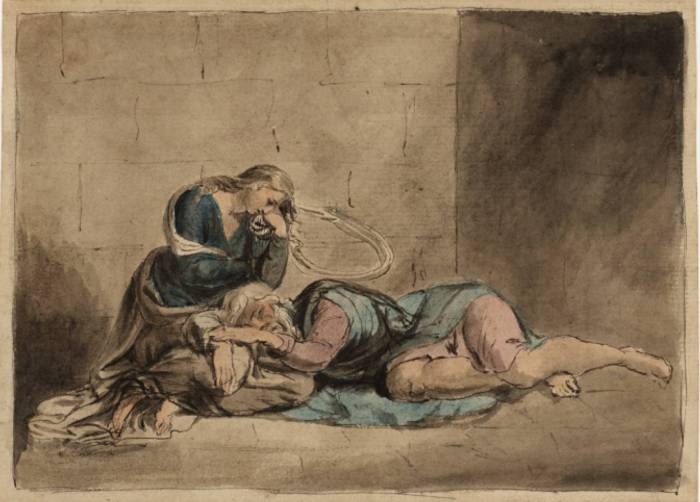
Tomorrow I will be executed. I have known this for forty days now, ever since I was thrown into this dungeon. All these forty days, I have been kept in one of the subterranean chambers of the Kremlin, of which there are countless numbers. My days pass in near-total darkness, though my eyes have long since grown accustomed to it. I have time in abundance and therefore surrender myself to memory.
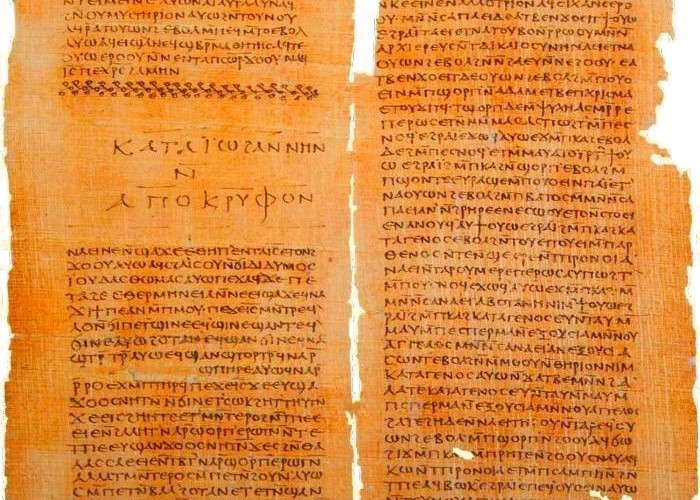
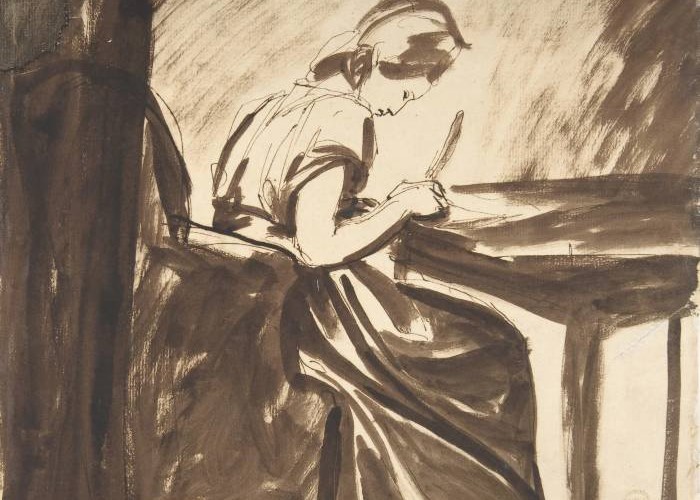
I am permitted a pine splinter for light; in my cell, I have several goose quills and paper. Why such mercy from those who condemned me? The answer is simple. This land is steeped in fear. By allowing me to write, they hope to extract secrets. Yet what secrets could I possess, even as a court physician, known in Moscow as Mistro Leon—or Lebi Zhidovin? Besides, I write in the language of our fathers, in ancient Hebrew script, occasionally shifting into Italian or Greek. I command all three fluently.
A small revenge, this, of one who will die at dawn. Learned interpreters at the Tsar’s court are few. Let them struggle a little now as they decipher my pages. And now—to begin at the beginning.
Birth
I was born in beautiful Venice exactly thirty-four years ago, into a Jewish family. Despite our faith, my parents—blessed be their path upon this earth without me—managed to have me educated as a physician. The years I spent at the University of Bologna were the happiest of my life. I was their only son, and my mother doted on me, endlessly troubling me with questions of marriage. She had already arranged a match with another family, where a beautiful girl named Miriam was growing up. That wedding would surely have taken place, had it not been for Chance.
His Majesty Chance
One evening, while squandering my parents’ money in a trattoria, I overheard a conversation at the neighboring table. The Grand Prince of Moscow, Ivan III, was summoning specialists to his court—engineers, founders, architects, masters of war, merchants, and physicians. I must have drunk far too much that day, for within an hour I was signing a lengthy document that altered the course of my life.
Preparations
I will spare you the tedious details of my preparations and the trials of readying myself for the journey to Moscow. My mother wept ceaselessly, begging me to abandon my decision. All was in vain. I had been seized by a longing for distant roads—a “hunger for wandering,” as a great singer of the land to which I was heading would say centuries later.
My father summoned me to his study, piled high with old manuscripts, prayer books, volumes, and maps. Never had I seen him so sorrowful, so unsettled. He laid his hand upon my head and recited prayers for several minutes. At parting, he gave me an ancient family prayer book, which has accompanied me ever since I left my father’s house. It lies with me even now, beside the head of what serves me as a bed.
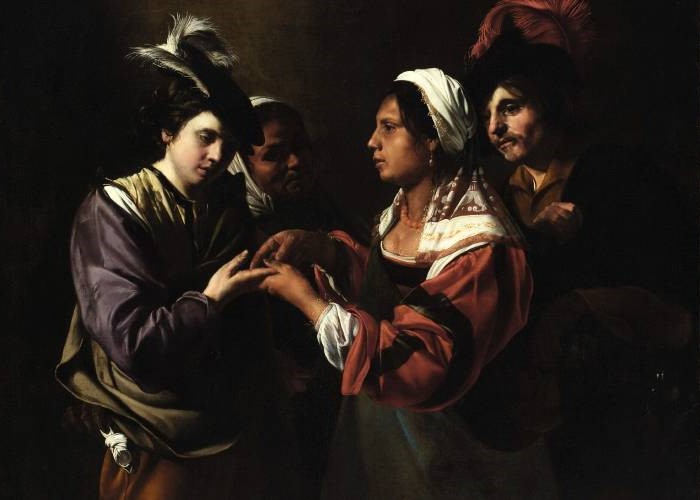
To the beautiful Miriam, I promised that we would wed as soon as I returned from Muscovy. I believed this sincerely. Only one thing troubled me: the prophecy of a gypsy woman who offered to read my palm. She foretold that I would die young, in a distant northern land, and refused payment for her words.
As I closed the gate of our home, I looked back one final time at my parents—already bent and visibly aged by those recent weeks. Would I ever see them again? I cast the dark thought aside at once. My heart was rushing toward the road.
The Road
Our caravan moved slowly eastward. We reached Moscow in thirty-three days. Horses were changed, as were the weather, the landscape, the drivers, the guards—and my own state of mind. Sadness gave way to cheerfulness, cheerfulness to despondency, and despondency to the quiet realization that I had finally grown up.
When I was neither gazing out the window nor asleep, I read or played tric-trac with my fellow travelers. My days were brightened by excellent Viennese schnitzels and white wine, which, I swear, was no worse than our Venetian vintages. In Bohemia, Poland, and Lithuania, I paid proper tribute to the local beer, casting curious glances at the Slavic women along the way.
At last, we reached the borders of the Grand Principality of Moscow. Though we carried letters of safe conduct, we were detained for a week before being allowed entry. We were lodged in the German Quarter, bearing the curious name Kukuy. At last, we had arrived. I was certain great deeds awaited me. I longed to begin my work.
Moscow
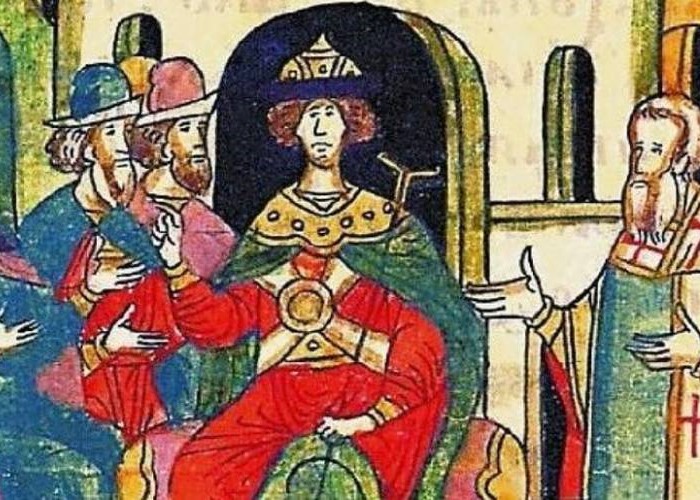
In Moscow, everything happens either with startling speed or unbearable slowness. The Grand Prince Ivan Vasilyevich decides all. Meanwhile, servants were assigned to me who, in addition to their duties, kept careful watch. In truth, they spied. Such are the rules when one lives in a foreign land. And not only in Muscovy.
At first, I had little work while I acquainted myself with local medical practices, which struck me as strange, if not outright barbarous. Nearly all the court physicians were foreigners. I had brought with me many books and instruments for complex cases. I delivered children for noblewomen alongside midwives, treated fevers, set bones, and stitched wounds. In time, I gained a reputation as a skilled surgeon.
I learned much from the Russians as well. They heal wounds swiftly with herbs and powders and treat many ailments with ingenious decoctions. I recorded these remedies in my journal, hoping to use them one day back in Venice. I came to greatly admire their bathhouses. Once, stiffened by cold and scarcely able to breathe, I followed a Greek acquaintance’s advice and went to the baths. Within four hours, they restored me fully, finishing with a cup of “bread wine.” I slept a whole day thereafter and awoke fresh as a cucumber—a Russian expression.
In my free hours, I wandered this strange city, so unlike my native Venice. In the evenings, I listened to choirs in churches and sat in taverns, called kabaks by the locals. I did not at once grow accustomed to Russian food—it seemed heavy to my Italian taste—but I learned to love shchi, buckwheat porridge, fish soup, and many other dishes. Good wine is scarce here, and I was forced to turn to mead, which I find delightful and treacherous in equal measure—much like the nature of Moscow’s women. Their beauty softened the harshness of the land. I confess: I was not always faithful to Miriam’s memory. Who could have been?
At times, I would have paid dearly to return home, yet I sensed that I would remain forever amid Moscow’s snows, just as the gypsy foretold.
Jews are few in Muscovy, and in Moscow they are not welcomed—nor, truth be told, are they elsewhere. Following my father’s counsel, I recite prayers daily in the language of the patriarchs, when no one can hear. Foreigners here are disliked and quietly feared. Muscovy is sealed too tightly against Europe.
Practice, or How I Became Known
Some years before my arrival, the first hospital in Moscow had been founded, where local healers worked alongside foreign physicians. We labored together, learning from one another. Without false modesty, I can say that I learned much in this land.
As my reputation grew, I was often invited into the homes of noblemen, who did not disdain to break bread with a Jew—especially one who now served as the Grand Prince’s personal physician. In such houses, one always found fine wines, and the kitchens were ruled by French or German cooks. I avoided conversation, ashamed of my poor Russian and mindful of what might be reported to the Prince, to whom all things here are subject. Moscow, like Venice, teems with spies and informers.
The Young Prince
My confidence proved my undoing. When I learned that the young prince Ivan the Young had fallen ill with gout, I immediately offered my services. I surrounded myself with books, prepared powders and ointments with my own hands, trusting no one, and began treatment. At first, the prince improved. Then his condition worsened.
I posted musketeers at his chamber and remained at his side day and night. Yet I failed. He was poisoned by the same methods often used in Venice or Rome to remove inconvenient men. And with him, I too am condemned, blamed for the heir’s death.
The Day of Execution
Morning breaks in Moscow. Church bells call the faithful to prayer. The pine splinter gutters in my cell, as does my brief life. Within the hour, they will lead me to execution, first feeding me and giving me mead—it makes dying easier.
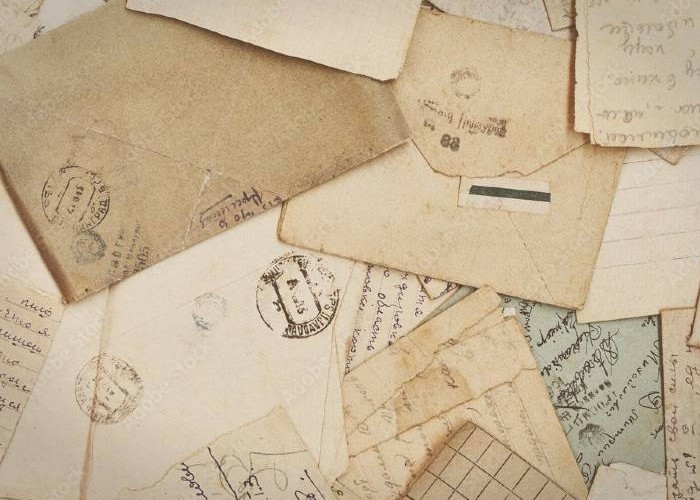
A musketeer who has guarded me these last days promised that the most skilled executioner will strike the blow. Two Venetian gold ducats were sewn into my doublet’s lining. I gave them to the guard without regret, along with the garment. In return, he promised—and I believe him—to deliver my prayer book and these pages to Jewish merchants from Poland who trade in Moscow.
He kept his word. My prayer book found its way to the Warsaw synagogue. I gave my medical books to fellow physicians and to the Russian friends I made here.
To my parents and to the beautiful Miriam, I wrote that I had chosen to remain in Russia forever. Let them believe I still live. Miriam, after mourning for less than a year, married another. My parents lived on in hope of seeing me again. Seven years after my execution, they left this world, one after the other, unaware that I had long been waiting for them elsewhere—God willing, in a better place.
A hearty breakfast and a cup of mead lent me strength. Snow fell sparsely, and the cold was bitter. I learned to endure much in this land—but never the cold.
As I climbed the rickety steps to the scaffold, where the executioner, the block, and the axe awaited me, I thought that the gypsy woman had been right. I would remain forever in this strange, frozen place I had come to love and even call my home.
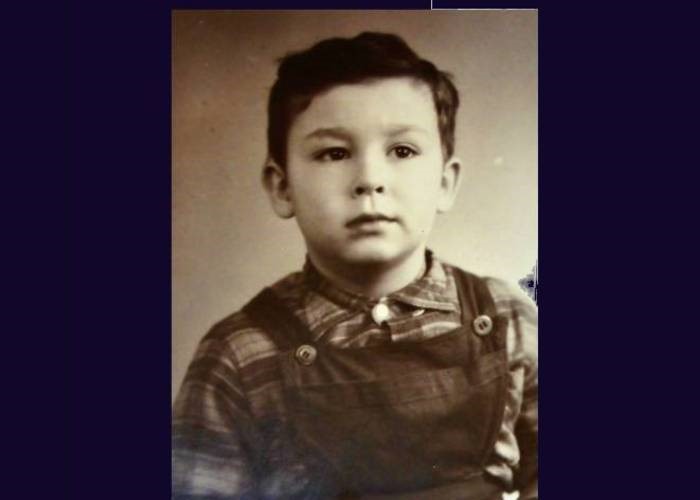
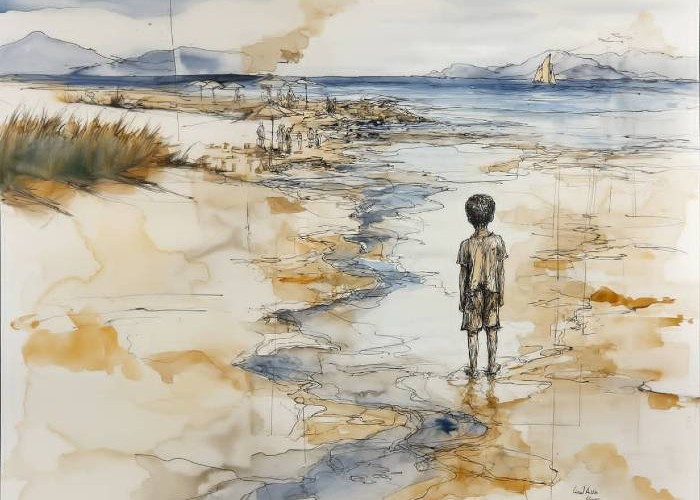
In the crowd, I noticed the frightened face of a boy, the son of our servant. My hands were bound, and I could not wave. I could only smile. The child smiled back. And for a moment, it grew a little easier for us both.
For how long?