Ladies and gentlemen,
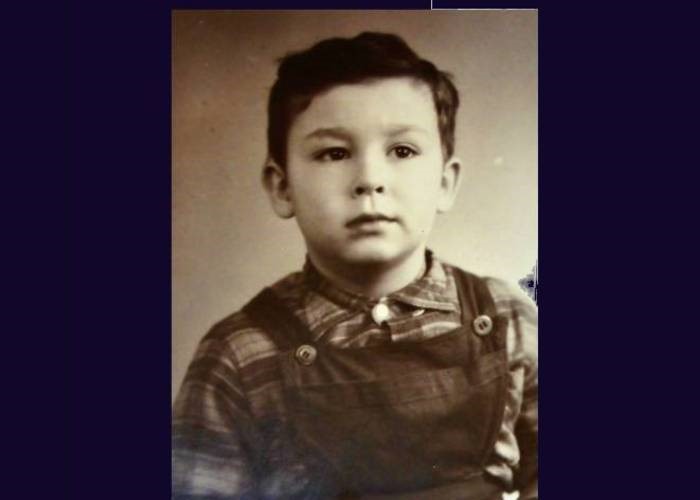
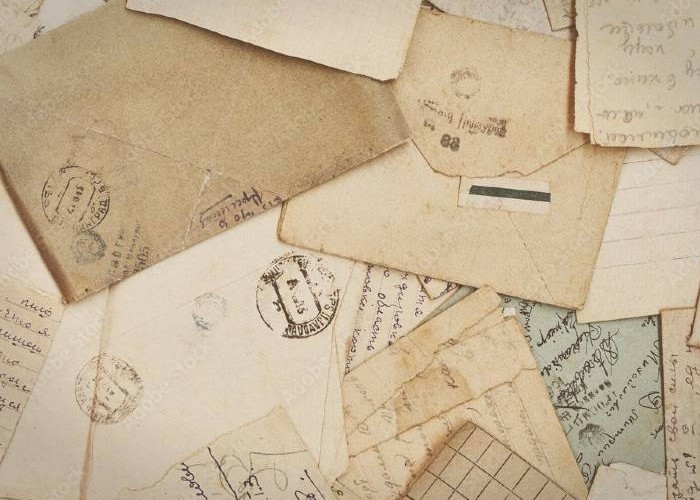
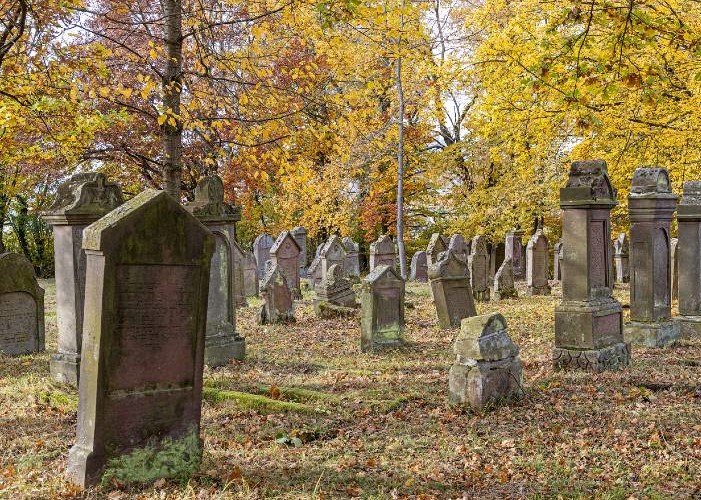
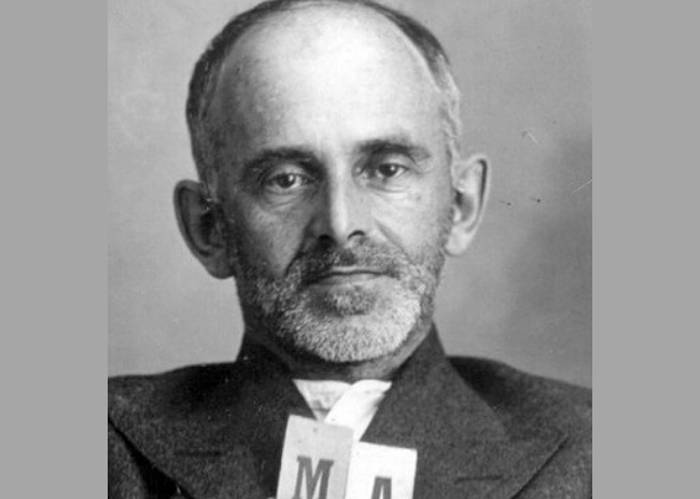
For many years, I have been searching for the grave of my great–grandfather, Joseph (Iosif) Rosenbaum.
He was born in the Russian Empire on July 1, 1886, in Baku.
In 1916, he emigrated to the United States, to California, traveling through Harbin and Yokohama.
He left behind his wife and daughter in Russia—my grandmother.
Joseph Rosenbaum passed away on February 18, 1952, in Los Angeles, where he had lived at 1519 Pleasant Avenue.
I would be immensely grateful for any information about him—who tended to his grave, who arranged his burial, who paid for it?
I know he was a lonely man.
It is deeply important to me to find out who, if anyone, looks after his grave today.
In other words, I would be profoundly grateful for any information about Joseph Rosenbaum.
Please help me find even the smallest thread that connects to his fate.
I live in Jerusalem and work at a hospital.
Thank you for any assistance you can provide!
P.S. The information in your records is incorrect: Iosif Rosenbaum was born in 1886, not in 1866, as indicated on the headstone.
Perhaps this is why I was unable to find his grave for so long.
* * *
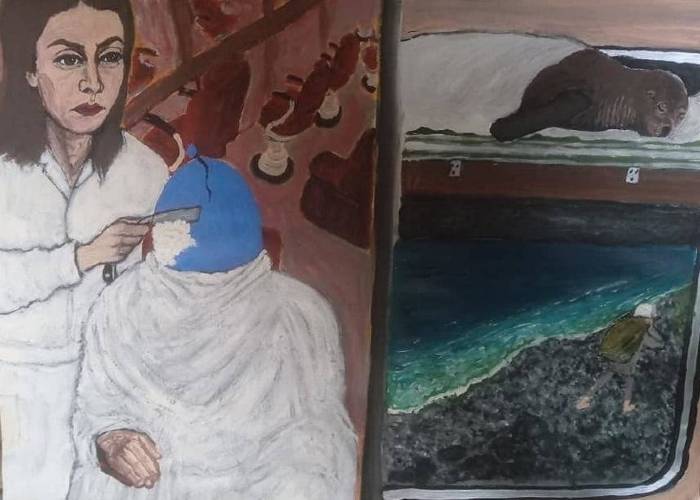
There are people who resemble whales. Restless, they seek out their depths somewhere—perhaps in a journey from Alaska to Tierra del Fuego, twenty thousand kilometers, catching, now and then, a rich upwelling—a surge of cold, oxygen-rich waters from the ocean’s depths, bearing abundant plankton and krill. But no matter how deep the whale’s path may be, it must inevitably rise from the abyss of oblivion for a breath of air…
What could be more mysterious than oblivion? Imagine something that once happened, or a nameless life lived—leaving behind little more than a bureaucratic trace in the archives, if even a grave. How much has disappeared without a trace? It seems to me that history should be viewed as an unpredictable darkness, made up of broad strokes and aspirations, of millions of victims and forgotten names, of the missing and the decorated. The unknown soldier—like my mother’s uncle, who vanished in the encirclement near Kyiv in July of ’41. The unknown everyman—like my great-grandfather, who crossed Europe, Asia, and the Pacific only to disappear within the dense rings of California’s passing years. These are the heroes of nonexistence.
Which brings to mind an analogy. To study the biophysics of cetaceans, scientists release streams of tiny bubbles into a pool with the animals—by photographing the trajectories of these bubbles with high-speed cameras, they gather the necessary data. History works much the same way—mighty figures, heroes, pass through it, yet we would know nothing of them if they did not, along their way, collide with the bubbles of unknown variables that fill the basin of an era.
Let us imagine two such figures—both living in Los Angeles for thirty years, from the 1920s to the late 1950s. Both as anonymous as two friends can be. One, a watchmaker by trade and a loner by fate. The other, a jeweler, a family man, and a communist. Already remarkable, but not enough. The Korean War is raging, Stalin is still alive, McCarthyism reigns, and the spy war over the atomic project is in full force.
Not far away––Nevada, where people from California drive their Fords and Buicks to watch nuclear tests. Yes, that too was once a pastime, captured in photographs: the spiny Joshua trees, the arrow of the asphalt road stretching from one mountain ridge to another, roadside signs for Fresh Beef Jerky, stands selling ice cream and soft drinks, stacks of smoked glass, a billboard reading Have a Nice Nuclear Weekend in Nevada, and women in bikinis—remarkable, really, how the atomic age’s triumph was immortalized in those strips of fabric, baring both Victorian and other, deeper secrets, revealing vistas previously unseen––now that was a real bombshell.
And then there is Kaczynski’s daughter (the one who is, evidently, the family man). The woman whom his lonely friend is hopelessly in love with suddenly moves to Nevada and becomes a public activist. How can one not suspect a game of spy chess at play? Yes, this is Flora Kaczynska, who would later win several lawsuits against the state of Nevada, a champion of women’s rights, whose name now graces one of the university buildings in Las Vegas.
Now, our focus shifts back to that nameless bubble—the one who was in love with youth—and we follow him, waiting for this man-whale to rise once more for air.
* * *
The year 1952 was a leap year, the Year of the Black Dragon. The U.S. president was Democrat Harry Truman, and war raged on in Southeast Asia. January 1st fell on a Tuesday, and in California, the New Year was celebrated among evergreen foliage, flowers, and palm trees.
On January 7, 1952, Orthodox Christmas, Kaczynska took Joseph to the Russian Transfiguration Church on Fountain Avenue. At the time, there were two Russian Orthodox churches in Los Angeles. In the smaller one—a single-nave, single-dome church—the rector was Father Gerasim Shorets. The holiday service drew a large crowd. Among them were emigrants from the revolutionary era and those who had arrived in the U.S. after the war. Some were familiar to Joseph, though he had never been introduced. Some recognized him and came up to greet him. After the service, Kaczynska’s acquaintances introduced their friends to him. Some of these older emigrants later became customers of the jewelry workshop owned by Max Neft.
By mid-January 1952, a dozen inches of rain had fallen in Southern California—twice the usual amount. Then, another storm added four more inches. The Los Angeles Times reported on January 19:
“The most extensive rescue operations are underway in Artesia. Around four thousand people in the southern part of the town are at risk of evacuation due to floodwaters reaching three feet inside homes.”
On February 6, 1952, an artificial heart was used for the first time in a surgical operation in the U.S. That same day, King George VI of the United Kingdom died in London. At the time, the future Queen Elizabeth II was on a visit to Kenya. She was proclaimed queen on February
8.
February 18, 1952, fell on a Monday. That day, Turkey and Greece were admitted to NATO. That evening, having left his car for servicing, Joseph pressed a recently purchased, this time loaded, Colt to his temple.
* * *
Joseph surfaced at the boundary of reality less often than the others; he could submerge deeply, as if remaining within the clockwork of the abyss, safely and attentively sensing himself at times as a bubble of nonexistence, at others as an intricate mechanism—a pendulum regulator, without which the precision of motion could not satisfy the cosmos with its likeness.
On December 24, 1951, he made his decision and purchased a revolver that very day—for, of course, the Lord created men, but it was Samuel Colt who eased their fate.
And in his final days, he resolved to indulge. He often observed himself from the outside, treating himself like a child he would soon part with for a long time. Nothing in his life had ever seemed more terrifying—just like that photograph from Time magazine, where children stood before barbed wire, their sleeves pulled up to the elbow, showing the photographer the numbers tattooed onto their skin.
Whale watching—this, too, was something he absolutely had to witness, apart from the cheerful, haughty, and obedient faces of the six paid girls, among whom was one who looked exactly like a Hollywood beauty, famous to many by name but to him only from posters.
The whale’s blowhole, wet and glistening beneath the overcast sky, which stretched low, trailing wisps of fog down to Santa Catalina Island, flared here and there with soft, plumed fountains of exhaled breath.
The swells soon rolled out in broad trenches, but he still didn’t get seasick—how many times had he traveled to Hawaii for his birthday, July 1st? Four, five––he couldn’t remember exactly, nor in which year certain things had happened to him there.
The whaleboat climbed the waves and descended again, shrinking back into a tiny vessel as it slid down. The weather was hardly ideal for whale watching, yet, for some unknown reason, humpbacks preferred this kind of overcast sky.
The whaleboat’s captain knew a favored feeding ground just beyond the island’s southernmost point. There, humpback whales regularly hunted small fish near an invisible silver cloud beneath the water, where flocks of seabirds gathered. The birds worked together: some dove below the surface to drive the fish upward, while others attacked from above.
The heavy-bodied petrels and shallow-diving gulls had no choice but to hunt at the surface or scavenge from their deeper-diving kin, who emerged from below with fish in their beaks. The fish, driven into a dense, frenzied ball, became easy prey not just for the birds but for the seals as well.
But sooner or later, the clamor of the birds caught the attention of a humpback whale, which would glide in and, with a single gulp, swallow the entire school, leaving the bewildered birds to search for their vanished meal.
* * *
His last lonely Christmas was as bad as everything afterward seemed good—but final. As usual, his old friend and benefactor, Max Neft, had invited him to a family dinner, but Joseph had grown tired of celebrating other people’s lives.
In the afternoon, he took the tram to the last stop in Santa Monica and sat alone on a bench, biting off one cigarette after another from the pack, writing in his journal. He reread an entry from the year before, when Flora Kachinska had given him a volume of Saint-Exupéry, and he, in return, had gifted her a small clock he had assembled himself. That was why he blushed several times, remembering her touch.
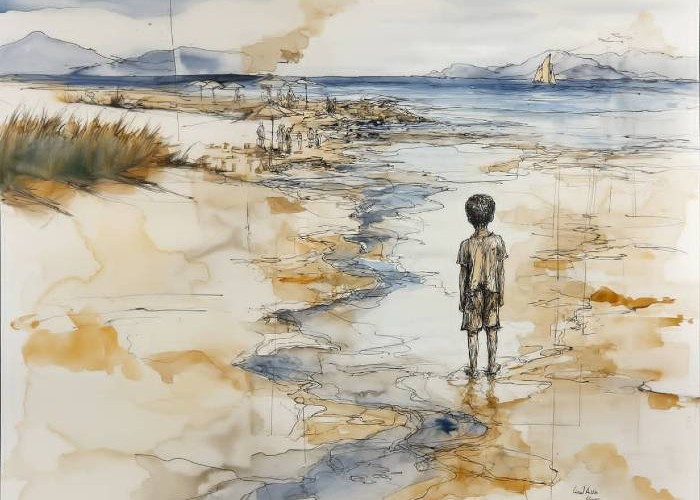
The weather was better in Santa Monica. Along the horizon, motionless clouds gleamed faintly like snow-capped peaks. It seemed to him that he had reached equilibrium. The eastern breeze cleared the mist from the coastline, revealing the slow breath of waves rolling toward the shore. The weary sun, tilting toward the horizon, was a reminder that life was passing.
The outward calm balanced the weight that had burdened him in recent months––the weight of solitude and something even less defined, a vague fear. He was once again not interesting enough to himself to endure sitting on the sidelines, not attractive enough to draw the gaze of passing mothers with their children, not strong enough to be left undisturbed for long, and just intelligent enough to understand that no one would shed a tear for him. No one. Other people’s tears were nothing but illusions.
And when the sun finally sank into the fog, he stood up and walked home unhurriedly, oblivious to the glances of passersby.
* * *
In 1952, in Los Angeles, the communist Kachinsky paid ninety dollars for the grave of his friend and fellow watchmaker, Joseph Rosenbaum—while in 1921, when Joseph had arrived in California aboard the Seyo Maru, he had seventy dollars in his pocket.
On the headstone––a black marble slab—besides his name in Hebrew, it was inscribed:
Joe Rosenbaum
Born in Baku
1 July 1886
Died 18 February 1952
Enchanted by Flora Kachinska, in love with her, Joseph sets out for the Nevada Proving Ground, where he engages in clandestine observation of the devastation wrought by atomic explosions.
At the test site, Joseph encounters ghosts––perhaps, like him, they are scavengers; or perhaps they are the legendary Native American Black Watchers––those mysterious beings who watch over the land, their dark silhouettes appearing on remote, inaccessible ledges.
And so, Flora boldly spies on behalf of her communist father, and Joseph agrees to help her. At her instruction, he records the exact duration of exposure in various radiation-contaminated zones.
Joseph only vaguely senses what he is involved in, but he has his own interest—one that gradually consumes him, driven by his heightened sensitivity to the not-quite-ordinary manifestations of existence.
* * *
The relationship between Joseph Rosenbaum and Flora Kachinska was a blend of desperation and the ruthless determination with which the young woman swept her suitor into journeys through small towns obliterated by atomic blasts.
In essence, Flora had recruited Joseph without his knowledge, regularly sending him to the test site—to linger there, to understand just how harmful the radioactive contamination was to the human body. Blinded by love, Joseph became a test subject.
What unsettled him most at the test sites was finding a mattress. No one was supposed to live in those places—so why was there a bed?
Joseph saw the world after the Apocalypse and, as a result, developed radiation sickness. Thus, love had consigned him to the kingdom of Hades in advance. But for what purpose? Let’s see.
* * *
The Nevada sun scorched reality. Suddenly, a bluish haze would appear ahead—a fine salt powder lifted from the salt flats by a gust of wind. Whirlwinds flared up and roamed here and there, rushing toward the roadside before noisily escorting the car past.
Every so often, solitary ranches emerged from the desolation—junkyards, in essence: automobiles from the 1930s like stranded caravels, bicycles, wheelbarrows, generations of prefabricated houses repurposed as sheds. For hundreds of miles in every direction stretched military test sites, connected to the outside world only by aircraft.
In the 1950s, a nuclear mushroom cloud could be seen from Las Vegas. Now, from civilian roads, one could watch as a ballistic missile pierced the stratosphere, leaving the sky breathing with the glow of ionized air—like the aurora borealis.
* * *
The thought of naked Flora Kachinska occupied Joseph’s mind as he glanced from the fuel gauge to the map, trying to estimate the distance to his next intersection with one of Nevada’s meridional highways—a road network haphazardly flung across the desert.
Joshua trees––named after the biblical Joshua—sprang up along the roadside, slipping past like the silhouettes of people throwing up their arms. For the fifth hour, the open space spilled beneath his wheels, and Joseph still couldn’t quite believe he could cross Nevada, feeling as though he were frozen between two horizons—one ahead, the other in the rearview mirror—even as the speedometer needle never dipped below sixty miles per hour.
The asphalt shimmered in the thick haze of molten air, glimmering like a lake, the sky seeming to unfurl beneath his tires. Now and then, rust-streaked tankers flashed past, their metal hulks vanishing into the heat. It turned out that if one found the courage to step into this hellish blaze, walk up to a tanker, and give it a good kick, a splash could be heard deep inside its belly, filled with stagnant water––a salvation for any traveler whose radiator had overheated.
He stopped beside a tanker and walked around it, noticing turtle tracks in the sand nearby. Suddenly, the sound of an engine reached him, and he turned to get a better look as a plane slid over the road, half-drowned in the heat mirage. No wonder he kept passing road signs that read Low Flying Aircraft.
Surprised that he wasn’t alone for a hundred miles around, Joseph hurried to zip up his fly and strode back toward the car, flashing the pilot a thumbs-up. The pilot waggled the wings, then glided toward the next ridge––a frozen ripple, an echo of the tectonic collision that had birthed the Sierra. These ridges were the only thing that could interrupt the endless horizon. The plane raced toward one fold in the earth, then lifted, banking left, then right, then once more, cresting the ridge before descending again, only to be struck once more by the vast, unbroken dish of the desert.
* * *
At 4:45 PM on July 29, 1951, he pulled over to the side of the road and glanced at the map, trying to place himself between Bison Creek, which he had just passed, and Chinook Cliff.
The cemetery—where waves of atomic explosions occasionally swept through—was within arm’s reach, but in this heat, even a mile felt like the edge of the world. The burial ground resembled a miniature city where only Lilliputians could live––a collection of ornate mausoleums sunk into the earth, looking more like small-scale models of famous cathedrals than tombstones.
At the imaginary address 623 Stevenson Road stood a half-collapsed house. Joseph climbed the porch steps and knocked on the door. A woman answered––one who needed no explanation as to why he was there. She nodded with a sad smile and said, “We’ve been expecting you,” but remained standing hesitantly. Then she added, “I want to invite you inside.”
He stepped into the front hall. Madeleine led him to the living room table, where a flock of children played under the watchful eyes of two faceless young women. She handed him a glass with ice, filled moments earlier from a pitcher. The ice was still crackling.
He took the glass and pressed his lips to its rim. He was among his ghosts once again. The moon bore witness.
* * *
Two or three lifetimes ago, Joseph married and moved to Lankaran. There, his only daughter was born––my grandmother, Lida. He assembled and repaired watches for the English and the wealthy Talysh. But above all, he hunted in the bay. That was how he fled from the lovelessness of his wife, Henrietta.
His childhood home remained in Baku, while in Lankaran, he opened a watchmaking and jewelry workshop––there were enough Englishmen at the border, drawn to Persia by the grandeur of their empire.
In the Caspian subtropics, Joseph felt, for a few years, almost as if he were near Westminster Abbey—if not for the sturgeon balyk hanging on the porch, wrapped in gauze to keep the flies away; if not for the primeval subtropical forest, made up of wild persimmon and ironwood, tangled with vines, threaded with streams and the pale rivulets of scalding sulfur springs.
***
The Caspian flamingo feeds on tiny shrimp and salt flies—the only living creatures in the boiled shallows. A scatter of crustaceans wriggles beneath the lens of its crystalline eye in the amber mix of sand grains and cilia, as though fused by the flickering of the shrimp into a cloudy glass. Clouds of flies drift low over the ground, and the birds wade into them, filtering, skimming them off like a scraper, bending close, their beaks dipping sideways in nearsighted pursuit. They emit a slurping, clattering, guttural chorus when up close.
The entire long and echoing expanse—mounds laid bare by the receding water, pillows of dried algae, trunks and branches of drowned wood – is coated in salt like snow. The acrid crust deters predators. That is why the flamingos freely build their nests on the dried-up flats – cones of silt and sand.
At sunset, the salt shimmers and seems to drift—as the sun lowers. The birds open their wings to the air.
A jackal had crept close to the nesting grounds and was now bounding across the salt, darting forward then doubling back, twitching first one paw, then the other, lowering his muzzle to the ground, rising onto his hind legs to spare the front ones from the burn, barely holding back a whimper, which made it look as though he were grimacing. Then he’d catch himself and race toward the birds again, lunge sideways–– into a puddle––but the scalding brine burned his limbs, and the jackal, biting down on his tongue, broke into a hopping run.
Joseph was amused by the dance. He flicked off the safety, and when the jackal, finally maddened by pain, dashed headlong into the nesting ground, he nudged the barrel and lodged a bullet into the cross between its ears. The jackal tucked its head, somersaulted, leapt again, thrashed—and scraped a streak across the sand.
The gunshot stirred the fabric of the flock—here and there it lifted, rippling, flaring, drifting above the bay’s gnarled murk in patches of sky and humped wings. Stirred reeds responded with a storm, a sigh, a murmur of speech. In some places, hiding from the kite beneath the corollas of reeds, kingfishers rocked gently, glinting with ultramarine. Big-headed and red-breasted, watching sidelong from beneath their heavy beaks, they tracked the sparkle of fry.
A vast mass of rustling reed pressed down on the hunter like a crashing wave: a living wilderness populated by wildcats, otters, muskrats, and flocks of moorhens that boldly harassed the water snakes—clenching them in their beaks like worms, thrashing them against the ground to stun them. The water reached up to his knees right up to the path, flooding clearings as he moved forward.
***
People usually arrived in Lankaran by sea. The coastal lowlands were unfit for travel. The boggy flats devoured any road. Gravel sank into the mire within a month. To the west, the mountains rose almost immediately. You couldn’t go far through them––only beyond them: into Iran. The boat to Hyrcania came once every three days, at dawn. The shallows, thrown open and breathing with steep waves, and the abandoned pier far up on the shore, rose like a mighty beetle flipped on its back, its legs of scaffolding reaching into the air. In the fog, the mountains looked like drunken giants collapsed into sleep. At unloading, a chaos of fire overtook the vessel. Rams, kicked by the passengers, bleated and leapt, scattered pellets of dung, thrashed their filthy fat-tails, stretched out quivering lips. Their exasperated owner grabbed them and tossed them overboard. There they flailed and jostled, then, upon reaching shore, froze in place: their wool stretched into icicles of streaming threads.
***
The humid subtropics of Hyrcania, once the hunting grounds of the Safavids, the rich, boggy silt of Gyzylagach. The meshwork of rice fields, flooded by sunset, gives way to the flats of saltpans, sparkling with a grainy, dirty silver. Ducks and geese thrash their wings, dapple the bay’s mirror with their beaks. In the evening, the honking of thousands-strong flocks of geese echoes above the water. Bustard flocks, dimming the light, flutter like a blizzard of wings, slicing the taut air with a whistling rush.
In the mountains, a leopard—an invisible ghost in the sun-dappled leaf shadows—pads silently on soft paws among the muscular trunks. A startled herd of boars, erupting with squeals, cuts through the thicket. The two-tiered relict forest—the same from which oil was pressed—thin as it climbed the mountains. Even in the Tertiary Period it rose here, unfurling, encircling, interspersed with flashes of liana growth, colonnades of fantastically twisted ironwood trunks, violet wild persimmon, and chalky ravines from which hot springs smoke through the cracks…
From the mountain pass, the watershed opened up: follow it, and soon you’d find yourself in Iran.
In Hyrcania, an innumerable army of birds overwintered: in still weather, entire clouds of flocks floated out to the middle of the bay––pelican, cormorant and spoonbill, brant, goose and swan, teal, pochard, white-headed duck and purple gallinule, coot and lapwing, curlew, snipe and pratincole—tumbling, basking, clicking their beaks through one another’s feathers, rocking in sleep—then suddenly erupting in a thunderous, bustling gust that tore along the reed beds. And it seemed: across the boundless, hidden plain drifted an omnipresent demon, brushing the reeds now with a breath, now with the seed of some invisible event—until, all at once, that secret avian universe collapsed somewhere out of sight, migrating in a terrifying roar, an avalanche of living noise…
In cold winters, many birds perished. The flamingos—among the first. The cries of the dying birds drove people mad. They climbed into the mountains, just to escape the sound.
***
Rains began to lay siege to Lankaran from the end of October, filling the river with a deaf fury. With that frenzy, it rushed forward, tearing away slabs of clay from the banks. They collapsed with a roar beneath one’s feet. The river swelled, pulled, dragged—whirling the head into dizziness—turning over, in its brown, gleaming body, trunks and branches that jutted up like the arms of swimmers, trembling under the pressure. The steel-colored sea, scarred by the wind, received the onslaught of the watershed, its wide expanse stained with clay. The murky blot, spreading out, stirred in the shallows and drifted toward the sky.
***
Setting the book aside, Joseph reaches for his gun and peers into the garden through the scope. Pushing through the foliage, he sees a trembling web strung with gleaming droplets, the railing of the open veranda, the porch, a pinch of wallpaper nails, a fly belly-up, its legs bent skyward, distorting the surface of a convex puddle, a small bottle of glue; from the gutter joint, intermittent streams stretch rhythmically downward. Along the railing, a swallowtail butterfly crawls, wings fluttering, its proboscis coiling and uncoiling—then freezing in place. Behind him, the horse snorts, strikes its hoof against the rail, crunches hay, shifts its weight—a warm wave spreads over his shoulders. Chunks of manure land with a dull thud, and a pungent scent creeps in from behind his neck. Suddenly, a drop topples the butterfly—it trembles, struggling to rise. The rain thickens, leaves quiver, branches bend under the pressure, then spring back up, and when they do, threads of droplets scatter in bundles from the trunks, blinding the view. A persimmon glows in the grass, blazing saffron in the dark, lush bed of purslane.
And the rain intensifies. Leaves tremble, sprays shroud the fruit in a mist—it drinks in the streams, glistening in a beaded sheen.
Joseph closes one eye.
The horse lets out a cautious neigh.
A long time passes before he stops aiming.
The crosshairs haven’t shifted a hair’s breadth. A steady hand—that’s what matters in shooting, no less than in watchmaking.
The rain exhales. The foliage cools. The drops thin out, the trickles fade, drain away, stop.
Without ever firing, Joseph hangs up the gun, lights a cigarette, veils his gaze in a twist of smoke, and opens his book.
***
The ragged pelicans, driving fish into the shallows, would erupt in a sudden, all-encompassing clamor that crashed into the reeds like a Roman phalanx. The water clouded with bird droppings—like the Universe itself, right after birth, from stellar matter. The stench hanging over the feeding grounds caught in the throat, burned the eyes. Up close, the graceful birds shrieked vilely, constantly quarreling, nipping, snapping their beaks.
Joseph knew that the best roast came from a firebird.
For him—like the movement of breath—there was a need to inhale and become the vision of this singular avian kingdom. He observed the feathered explosion of color, of vitality, of sound and cry, the force with which the circling routine of flock life––the simplicity of death, the raw animal thirst for life, the feed––led him toward a mysterious intention of beauty, which he sensed as alien, yet the world’s essential truth.
It mattered to him to feel the gratuity of that intention, to imagine again and again those journeys—fabulous in their senselessness, dramatic migrations strung along the faint light of navigational constellations, drawing the birds out of the cosmic void of the Urals, Siberia, Chukotka, to winter in the bay.
He thought about bird migrations the way one thinks about their own mysterious future. At sunset, the birds flew to feed in the rice fields —toward the bijars, rich with grainy stew, humus porridge, and bloodworms. Joseph would step out from behind the old barge, rusted into lace, grounded since the 1920s, when the sea had suddenly retreated––and there he would freeze, filled with a sensitive deafness.
Suddenly the air would be stitched with taut currents, strings lashed by the cannon-like thrust of flight—three at a time, two, or alone, the birds would cross the dangerous stretch at low altitude. And Joseph, squinting, listening intently to the sky, would release the trigger, severing that wildly fluttering string—hearing, a moment later, a solid, delayed thud.
***
The walkways stretched out into the bay. At dawn, the rain fell in intermittent taps, as if playing a tune. Suddenly, a duck would take flight. The sharp flapping of wings. The duck would crash noisily toward the end of the walkway, neck stretched upward in a desperate launch, like a snake rising from the water. The silver surface ringed its paddling feet. It burst into the air with the fervor of trapped flame: a heart embraced above—and a heart embraced below.
The winter that year was bitterly cold. Flamingos wrenched their stick-like legs from the frozen silt. Heavy, sticky snow was falling. The birds tried to take flight—running, flapping their wings, tangling with the snow, collapsing. Well-fed jackals, half-deafened, roamed freely across the bay, now and then crouching to bite chunks of ice from their paws.
***
I find peace only when I lay a blank page before me and write my incantation. For instance, the day begins with me opening a can of coffee and listening to the silence with which the dark grounds stare back at me from the bottom. And I try to understand what happened to me during the night—whether I’ve awakened as the same person. I never find myself—neither new nor old. Something always happens to me in the night, something that allows me once again to dip a spoon into the morning, to take in the east, where a strip of crimson January dawn begins to glow. And something lingers in the air after the muezzin has sung his prayer from the nearest minaret. How strange—it’s as if there are so many scattered fragments of invisible Europe all around, and yet how much courage and perseverance it takes for the city to make the sign of the cross. There is something mighty in what I see—the dawn above these hills. I don’t entirely enjoy this awareness, and so I continue stirring the fragrant coffee as it falls from the spoon into the cezve. I set it on the fire and roll my first cigarette. The ashen milk of dawn and a sip of the aromatic brew dispel the last remnants of dreams. With a flick of their tails, they vanish, returning to their master. Now everything in me speaks of freedom––of a kind I have never known. I wonder where it had been all this time? Now I know fully what carefreeness is, its fragile grandeur, which grants me the right to walk to the sea every day. Today I’ll do it again. This is the sentimental side of my life—these almost daily walks along the sea.
And still, I find it strange how deeply I’ve become solitude itself. I can barely make out the glint in another’s pupils, and even then, only faintly and rarely. I’ve grown nearsighted in this, and there’s nothing to be done about it.
If I wasn’t going to the sea, it meant I was visiting my ba, my Lida. For six years, the daughter of Joseph Roсenbaum lived in a hospital for patients in need of constant care. It began when she started confusing which son was in front of her. “Who are you?” she would ask. “Are you Vitya or Dima?” When I came to visit, I would sit beside her and quietly glance at her from time to time. You couldn’t touch her, let alone kiss her. I said nothing, and she said nothing—and it reminded me of sitting before an abyss. She remembered nothing; I remembered so much. For instance, how on a hot, stifling, humid night in Absheron, when I was very small, she would perch on the edge of my bed and fan me with a newspaper until I drifted off to sleep. I remembered how she would secretly pour coins from her purse into my palm. I remembered. But it wasn’t about memory. It was about that silent, stubborn sitting beside one another. It wasn’t even clear who was visiting whom.
That Friday, I had planned to go to the sea, but instead turned off toward one of the remote, hilly districts of Jerusalem. It was spring, and the April air was sunlit and crystalline, like a goldfinch’s song. The nurse took my hand. “Lidia didn’t wake up today,” she said. And I stood there, frozen.
Since then, I’ve had no one left to visit. So now, I only go to the sea.
***
At some point, Grandma Lida completely lost any grounding in reality. During a layover in New York, she lost her small suitcase with all her documents, photographs, and humble family relics. Later, when I asked how she got there, she replied, “We sailed on a good, big steamship, and I wasn’t afraid of drowning.”
“Ba, it was a plane! Why do you say a steamship?”
“Because it had portholes.”
Grandma suffered from dementia––that much could be said with certainty, based on the diagnostic methods of the time. She forgot a lot–both distant and recent––and clearly lost her short-term memory from time to time, becoming terribly absentminded. On top of that came suspicion, delusions, a firm belief in imaginary situations…
People from the past, from the turn of the century, would visit her—or so she said—and tried to tell her things about her father, who had vanished in California. Reality and memory rippled around her like a disturbed surface. To me, it was both unbearable and wildly fascinating.
Then came the escapes into the city. More than once, the San Francisco police brought her home. They eventually required a bracelet on her wrist, which she did everything in her power to get rid of. It all ended with her moving into the Jewish Home–where, at last, she found peace. In the end, she stopped recognizing people, confused her sons, and eventually forgot even them. Before she died, she didn’t recognize me either—she flinched when I kissed her goodbye.
Grandma Lida had always been marked by a sharp-edged nihilism that began with misanthropy. According to family legend, when I was brought home from the maternity ward, she muttered, “Well, another martyr has been born.”
My mother never forgave her mother-in-law for that, though she always pitied her. And really, how else could one feel about a woman who had lost both her husband and daughter in the war and was left alone with two small sons?
A military doctor, Grandma Lida spent the second half of her career working for the ambulance service. Her most frequently used diagnosis was something she called simulanticus naturalicus. I was thrilled when she took me along on house calls. It felt like a real adventure—like a trip into the Absheron slums during a dysentery outbreak.
Her lifestyle was simple: work, cats and dogs–and reading, both medical texts and literature. The house was packed with books, and the yard teemed with countless feline creatures. I remember Mad Mashka, who once swallowed an entire frozen pollock out of hunger, and the old tomcat Aksakal, who would fall asleep while walking across the veranda: he’d amble along, amble along––and then flop onto his side. He’d do this three times before finally reaching the door.
The dogs were fierce, powerful, with cropped ears and tails. When they returned from another dog wedding on the brink of collapse, Grandma would start patching up their hides with special thread, leaning over from a wicker rocking chair in the garden.
Lida worked a twenty-four-hour shift every three days and had the uncanny ability to fall asleep at any moment. She read mostly Chekhov and Tolstoy—all hundred volumes, including the letters and diaries. She would fall asleep among the pages, wake up among the pages, and continue reading…
She also listened to the BBC and Radio Liberty, placing the radio flat inside a copper basin—for better sound–where she also made jam from rose petals, figs, and other treasures from the garden.
As I said, she didn’t care much for people, and winning her affection was hard. She kicked me out of the house more than once, but her perpetual absentmindedness served as both forgiveness for her and reconciliation for me.
***
Insomnia nearly crushed him. Dawn was the most dangerous time—Joseph feared he might do something terrible to himself out of indifference. Indifference was more dangerous than despair. When things got especially hard, he imagined himself going somewhere—on a steamship, on a train—that somewhere in this world there was a window—a porthole or a sliding pane—through which he could catch the movement of the passing air, its resilience. Once, that movement had been real––moving toward the future. Now, he was only trying to steal a breath through a half-open window…
When Joseph was born, the entire world seemed to him a form of rapture—he went to bed reluctantly and awoke each morning with a full clarity of happiness. One day, after washing his face, he began to cry. His father looked up from the watch clamped in his vise. Joseph explained that it had suddenly occurred to him that someday all of this would end, that he would die, and everyone else would too––but most importantly, that the world would die with him, and he, a small boy, would no longer be able to see it, to swim in it, like he had swum in the sea last summer…
His father barely managed to calm him down, telling him that when Joseph grew up––he would become a watchmaker like his father––and would invent a watch that could slow down or speed up time at the will of its owner.
Half a century has passed since then. Joseph became a watchmaker, a master craftsman—but he never did invent a watch that could stop time.
***
The streetcar graveyard, Los Angeles, 1952—one of the most famous photographs. A mountain of streetcars with shattered windows, through which so many people once looked…
Los Angeles once had the largest streetcar network in the world. But by the mid-century, the city chose to abandon public transportation. People believed the future belonged to the personal automobile.
What had he seen, besides his love for Flora Kachinsky, over the thirty years of his whale-like migration?
A job in Los Angeles, at a watch and jewelry shop. Loneliness. Occasional relationships. Trips to Hawaii. Streetcars everywhere––until one day he bought a car and kept it in a garage not far away.
The garage.
Rain again. No one around—everyone’s scattered. Puddles bubble outside the hangar.
A man raises a Colt to his temple.
***
More than once, Joseph raised the unloaded Colt to his temple and pulled the trigger.
And each time, his mind first summoned an image of a bay drenched in the setting sun, then a jackal running, creeping toward birds; and suddenly, at the click of the hammer, the animal would leap with all its might, flip head over heels, and tumble into the mud.
That’s when the darkness would flare in his eyes.
***
So then? It must begin on February 18, 1952—the last day of Joseph Rosenbaum. It must begin in the garage—and move backward, to 1916, to the moment when Joseph, dressed in Persian garb, sitting on a donkey and feeling the pouch of diamonds beneath him, turns to look back at the coastal valley, at the gardens of Lankaran fading into the mist, at the sea with its emerald band marking the drop into the deep.
Ahead lies Iran, America—oceans and continents ahead, the time of life still to come.
The story lasts as long as the bullet is in flight. And in the very end, when Joseph glances back at his future life, he waves his hand as if shooing away a fly buzzing at his temple––but in truth, he catches the bullet.
And it remains forever alive.