In September, Gennady Ivanovich Larin, an actor at the Regional Drama Theater, turned 59. He had dozens of roles behind him—some significant, some not so much—two broken families, grown children, and even three grandchildren.
At present, he had poor health, minor roles, skillfully concealed alcoholism, and profound loneliness. His joys in life were strong coffee, expensive cognac, and a collection of Kargopol toys, which Larin carefully guarded. His only companion was an old and lazy cat named Nicholas. They had lived together so long that they had even begun to resemble each other in their habits and mannerisms. Larin would not have been surprised if one day the cat had asked for cognac and a double espresso with breakfast.
There was little work in the theater, and the roles were mostly minor. Only occasionally did he get the chance to play something significant. But in his youth, Larin had shone and shown great promise. Elegant, slender, with thick hair, he had seemed ideal for roles as heroes, lovers, romantics, and idealists. But as the years passed, Gennady Ivanovich went bald, put on weight, and ceased to resemble his former characters. He played other roles less convincingly, and his roles in the theater became fewer and fewer. Those that he did get became less and less interesting with each passing year, requiring neither serious work nor mental effort. In the theater programs sold before the start of the performance, the surname Larin was firmly settled at the bottom of the page.
And so Gennady Ivanovich lived. He and his cat grew old, his children grew up, his grandchildren grew up. Larin had long been accustomed to living without great joys or sorrows. Sometimes, waking up and not yet getting out of bed, it seemed to him that he was still capable of playing a major role. But these roles did not come, and Gennady Ivanovich continued to live as if in a half-sleep.
In the summer, a young director from Moscow was invited to the theater for two seasons. Among other productions, he was given the opportunity to stage King Lear. Larin sat at the casting meeting apathetically and indifferently. He was given the role of Edmund, the Guard Officer, and soon began rehearsals. When the lead actor playing Lear fell ill, the director unexpectedly cast Larin in the role. He saw something in the elderly actor, perhaps something that Larin himself did not know about himself. And the role of King Lear took on new colors. It turned out that the former hero-lover was hiding a true tragedian. Larin played his emptiness, loneliness, and shattered hopes.
The troupe began to say, “Look how the old man has blossomed—who would have thought?” Local newspapers wrote about the play, praising Larin’s performance. Once he was even invited to appear on local television, something that had never happened to him in his youth.
Meanwhile, Gennady Ivanovich’s health was deteriorating as his popularity grew. He began to experience dizziness, sometimes lost his balance, and his eyesight deteriorated sharply. The doctor diagnosed him with a brain aneurysm. Larin continued to perform in the theater, and no one knew about his diagnosis. With each performance, it became more and more difficult for him to go on stage, but he did not give up. At some point, Larin could not take it anymore and told the director about his illness so that he could find a replacement for him.
On Gennady Ivanovich’s 60th birthday, he received an order conferring on him the title of Honored Artist. He celebrated the holiday with his cat, and on Sunday his children and grandchildren came to visit him. Larin and Nicholas were happy.
A month later, on a winter morning, Nicholas the cat, the closest creature to Larin apart from his grandchildren, did not wake up. Nicholas had wanted to live to see his master’s glory, believing in his talent and supporting him throughout his long cat life. That evening, Larin performed particularly well.
A week later, Gennady Ivanovich became very ill. For the first time since taking on the role of King Lear, he missed the morning rehearsal and went on sick leave. Gennady Ivanovich never returned to the theater.
At the cemetery, shifting from foot to foot and shivering from the cold, he was seen off by a small theater troupe along with the administration. Everyone waited for the empty, official speeches to end and the memorial service to begin. Gennady Ivanovich himself had often been among those seeing others off on their final journey and, of course, would not have condemned his colleagues for their impatience. Closer to the grave stood his tearful ex-wives, looking remarkably similar in their mourning attire. The children were without grandchildren—this was Larin’s request when he was still acting in the theater, that there be no grandchildren at the funeral.
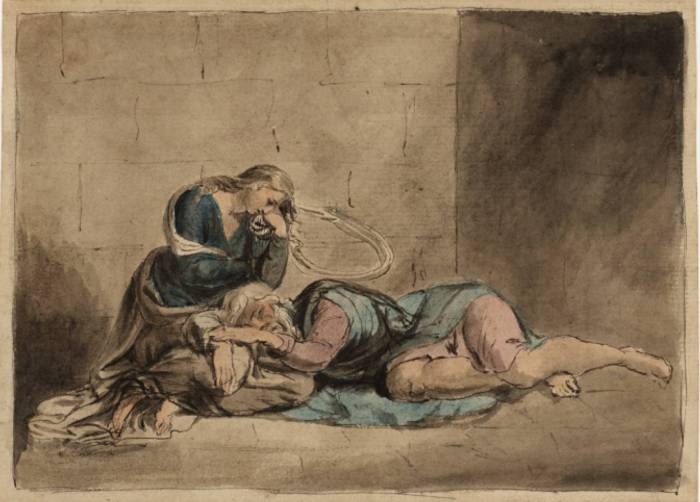
Twenty meters from the grave, invisible to anyone but Gennady Ivanovich, King Lear cried silently, holding the cat Nicholas to his chest.