
Poets of Ukraine. Taras Shevchenko’s Testament: a Ukrainian Classic. Translated by A.Z. Foreman

Also in Translations:

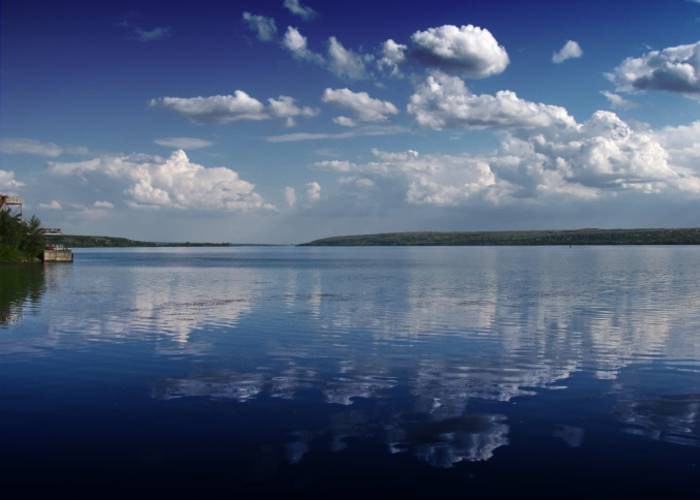
1. Dnieper
Dnieper (Dnipro)
Poets of Ukraine. Taras Shevchenko's Testament: a Ukrainian Classic. Translated by A.Z. Foreman

When I die, then bury me
On a rolling plain.
Raise my barrow in the soil
Of my dear Ukraine
With the wheatfields and the cliffs
Of a plunging shore
In my sight, where I can hear
The booming Dnipro’s roar.

When its seaward waters bear
The invaders’ blood
From Ukraine, then I will leave
Field and hill for good.
I will quit it all and fly
Bursting up to God
And say prayers..but till then
I don’t know a god.

Bury me then rise again
And shatter your chains.
Stand and water freedom with
Blood from tyrant veins.
Then in a new family,
The great kin of the free,
Say a soft and gentle word
In my memory.
 

The Original:

Заповіт
Тарас Шевченко

Як умру, то поховайте
Мене на могилі
Серед степу широкого
На Вкраїні милій,
Щоб лани широкополі,
І Дніпро, і кручі
Було видно, було чути,
Як реве ревучий.

Як понесе з України
У синєє море
Кров ворожу… отойді я
І лани і гори —
Все покину, і полину
До самого Бога
Молитися… а до того
Я не знаю бога.

Поховайте та вставайте,
Кайдани порвіте
І вражою злою кров’ю
Волю окропіте.
І мене в сем’ї великій,
В сем’ї вольній, новій,
Не забудьте пом’янути
Незлим тихим словом.

— Dec. 25, 1845

About the Author:

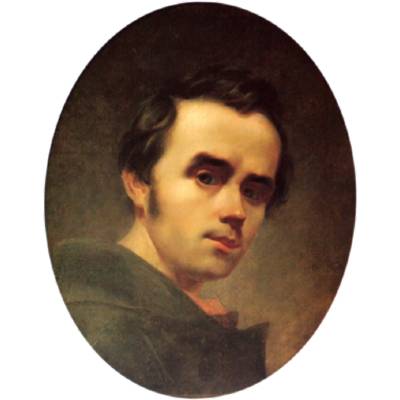
1. Taras_Shevchenko_selfportrait_oil_1840_(crop)
photo by Self-potrait (oil on canvas)
Taras Shevchenko
Born in Moryntsi (Ukr. Моринці), a village in central Ukraine, in the Zvenyhorodka district of the Cherkasy Oblast

Taras Shevchenko (1814 – 1861) was a Ukrainian poet, writer, artist, public and political figure, as well as folklorist and ethnographer. His literary heritage is regarded to be the foundation of modern Ukrainian literature and, to a large extent, the modern Ukrainian language, though the language of his poems was different from the modern Ukrainian language. Shevchenko is also known for many masterpieces as a painter and an illustrator. Born into serfdom, he began writing poetry early in life, while still a serf. In 1840, his first collection of poetry, Kobzar, was published. According to Ivan Franko, a renowned Ukrainian poet in the generation after Shevchenko, “[Kobzar] was “a new world of poetry. It burst forth like a spring of clear, cold water, and sparkled with a clarity, breadth and elegance of artistic expression not previously known in Ukrainian writing”.

About the Translator:

Alex Foreman
Alex Foreman
USA

Alex Foreman (aka A.Z. Foreman) is a linguist and translator of poetry from Arabic, Catalan, Chinese, Dutch, French, Greek, German, Hebrew, Italian, Latin, Occitan, Persian, Polish, Spanish, Serbian, Russian, Romanian, Romani, Ugaritic, Ukrainian, Urdu, Welsh, and Yiddish.
A blog of his translations: https://poemsintranslation.blogspot.com/p/my-poetry-translations.html

Taras Shevchenko Тарас Шевченко
Bookshelf
behind_the_border-cover
by Nina Kossman

“13 short pieces…pungently convey the effects of growing up under a totalitarian regime.”                       .—Publishers Weekly

Version 1.0.0
by Nina Kossman

A new book of poems by Nina Kossman. “When the mythological and personal meet, something transforms for this reader…” —Ilya Kaminsky

Other Shepherds: Poems with Translations from Marina Tsvetaeva by Nina Kossman
by Nina Kossman

Original poetry by Nina Kossman, accompanied by a selection of poems by Marina Tsvetaeva, translated from Russian by Kossman. “The sea is a postcard,” writes Nina Kossman. There is both something elemental in this vision and—iron-tough.”
—Ilya Kaminsky

cockroach cover
by Nina Kossman

A collection of nonsense poetry for readers who love Edward Lear, Dr. Seuss, Hilaire Belloc, and all things delightfully peculiar.

Videos
No data was found