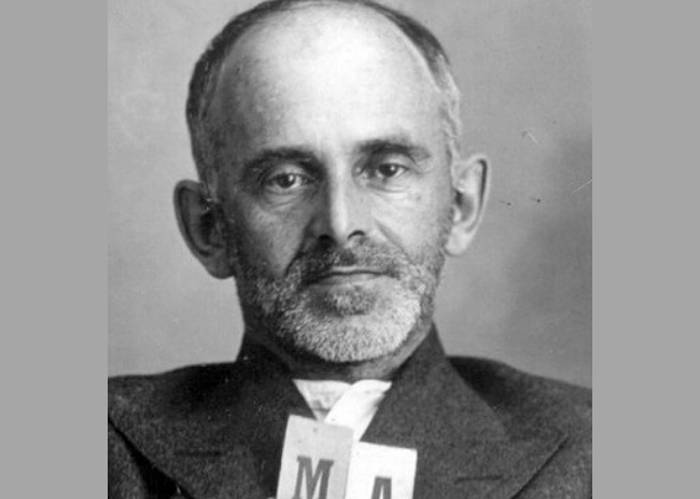
Immanuel Kant wrote the complex philosophical treatise *Critique of Pure Reason* in order to prove the existence of God. Jewish sages assert that the existence of God is proven by the entire history of the Jewish people—who, after two thousand years of exile and persecution, returned to the Promised Land and revived their language and statehood, just as was foretold in the Torah, in the Book of Deuteronomy. Mandelstam, doubting that God requires any proofs whatsoever, wrote in his poem “Bach”:
When your grandchildren came to hear it,
Debater, playing your chorale,
Was it in truth support for spirit
You sought in proof and rationale?*
Personally, my circumstances are on a completely different scale; yet, the search for God—the need for proof of His existence—has arisen within me more than once, particularly during moments of despair. Everyone in this world experiences periods of profound anguish and bewilderment, of disillusionment with those around them, and of a loss of faith in their own strength. During such times, people cast about frantically, seeking support and a spiritual anchor. I am not a religious person, yet I believe that a certain higher power—a Spirit—does exist, and that, at times, it comes to our aid and even saves us.
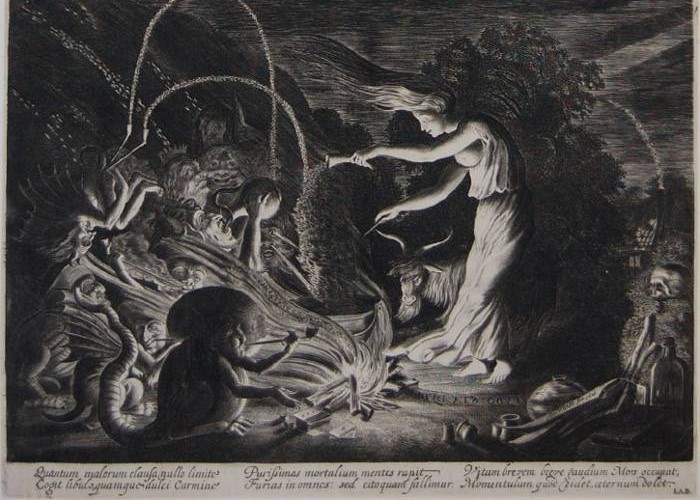
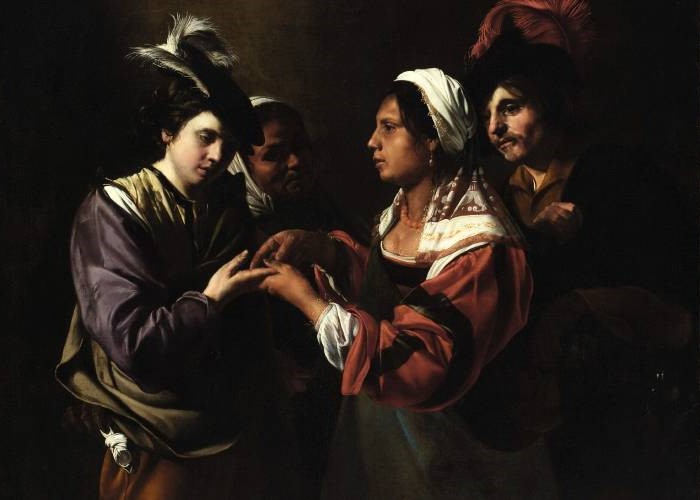
There came a time in my life when I hit rock bottom: everything had become utterly repulsive to me—especially my job. One bleak winter day, I asked for time off work and set out with no destination in mind—simply wherever my eyes might lead me. I ended up in Manhattan. Even Times Square, on that snowy winter morning, seemed quiet and deserted. I wandered aimlessly. I longed—with an ache that went to the very bone—for solace, for warmth, for a touch of kindness, and for a prophecy assuring me that everything would turn out all right. Then I spotted a sign: “Fortune Telling.” I rang the bell and climbed a narrow staircase. I was met by a young, slender brunette in trousers with long, flowing hair; she led me into a small room where, from a niche in the wall, a rather large crucifix gazed down at me. Of course, I think to myself, in places like this—where mysticism and the occult are practiced—a divine image is absolutely essential for protection against evil forces. She seats me at a small table and lights a candle. She uses neither Tarot cards nor books, yet she begins—with remarkable insight—to describe my inner state. I appreciate this because she asks no questions and doesn’t pry into my soul. It feels as though she truly sees right through me; she even correctly guesses that I work as a teacher. She looks and speaks like a modern woman, yet by the end of our conversation, she concludes that I am under a curse. She used that very word—*porcha*—in Russian, even though our entire conversation had been conducted in English.She spoke no Russian, and by her own account, she was of Greek descent. In short, a diagnosis was made, and she proposed that I undergo a course of treatment. To do so, I had to give her 400 dollars. I had to go to the bank and then return to her place. For some reason, she recorded the serial numbers of the banknotes and gave me detailed instructions: once home, I was to take a raw egg, wrap it together with the money in a scarf, and place the bundle under my bed. Every evening, my seer instructed me to light a candle and recite a prayer. Once a week, I was required to visit her for an appointment. All this sorcery captivated me and even served to distract me from my sorrowful thoughts and feelings. I diligently followed all the instructions in the hope that the treatment would help—though, in the deepest recesses of my soul, I was secretly poking fun at myself. In other words, my skepticism and self-irony had finally kicked in, and my mood clearly improved. Yet there was something delightfully thrilling about surrendering to all that magic and hypnosis. Immersing oneself in the irrational is akin to falling in love: the mind falls silent.
About a month later, the fortune teller instructed me to bring the bundle. During the session, she chanted incantations over an egg and the money in a language I did not understand, her intensity mounting all the while—and then, the climax arrived. She cracked the egg, and out of it flowed… the head of the Devil, bearing a repulsive, ghastly visage. I swear, it was truly the terrifying face of the Devil. I was stunned, and she, too, was incredibly agitated and frightened. “Do you see? Do you see?!” the fortune teller cried out in alarm. “This must be removed immediately! Now do you understand just how dangerous and perilous my work is?” And so, the exorcism of the Devil was complete. “But now,” the sorceress said, “all that remains is to completely remove the porcha.” At that, she began feverishly scribbling something down on a scrap of paper. She was writing down exactly how many banknotes—and of what denominations—I was to bring her the following day. The total was to come to four thousand dollars. At the very last moment, however, she adjusted her calculations and subtracted the four hundred dollars that had already been used; in other words, I needed to withdraw three thousand six hundred dollars from the bank. She handed me a note containing numbers and repeated the same instructions: an egg and money in a bundle to be placed under the bed. Before leaving, the sorceress warned me that strange things might begin to happen to me—I might hear voices, thunder could suddenly crash out of a clear sky, and all manner of unexpected events might occur. These were all the machinations of the Devil, she explained. Yet I had to remain steadfast in order to ultimately achieve deliverance from the porcha.
On my way home—feeling somewhat dazed, not by the face of the devil, but by the sheer extortion—I didn’t even think to withdraw the specified sum from the bank; after all, why on earth would I lug around such a substantial amount of cash in the evening? It was already abundantly clear to me that this was a scam of the purest water. Yet, once I got home, I still wrapped the original 400 dollars—along with the new egg—in a scarf and shoved the bundle under the bed. The next day, during my lunch break, I trudged resignedly toward the bank; but then, out of nowhere, my inner voice convinced me that there was actually no need to withdraw any money that day—that I had simply gotten everything mixed up. I walked past the bank with a sense of relief. On the way back, however, I stumbled and twisted my ankle severely. I hobbled all the way to school, then called the fortune teller to let her know I wouldn’t be able to make it. “Well, didn’t I tell you? These are the machinations of the Devil! Bind up your leg and come anyway!” she commanded. Later, upon arriving at my subway station after work, I discovered that the direct train to my fortune teller’s place wasn’t running—something had happened on the line. I called her again. She insisted—almost hysterically—that I find an alternative route using other trains. Driven by a sense of duty and nursing my injured leg, I finally dragged myself all the way to her place. She unwrapped the small bundle I had brought, and when she failed to find the banknotes she had been expecting, she stared at me with wide, astonished eyes. Calmly—and with great conviction—I pointed out that the discussion had not even touched upon the full amount. At that moment, the surprise in her eyes gave way to admiration. Perhaps she was struck by my sheer cluelessness, but more likely, she was impressed by the fact that the proverbial “machinations of the devil” were, in reality, my powerful divine protection against her deceit. As a mere formality, she cracked the egg I had brought. Out flowed a perfectly pristine yolk—for where, after all, could a “devil” possibly come from in an egg that had spent just a single night outside the refrigerator? My wily charlatan pocketed the 400 dollars and sent me on my way with God’s blessing.
I do not know whether I was truly healed of the porcha, but one thing is absolutely certain: during my dealings with that fraudster, a higher power truly protected me—the fool that I was—from committing even greater acts of folly. And ever since, this story has served as proof to me of the existence of God—or, at the very least, that the closer danger draws near, the more inevitable miracles become.
_________________________________________________
* From Tamara Vardomskaya’s translation of Mandelstam’s poem “Bach”
Both versions of the story, English and Russian, are the author’s.