



Chapter One
“Is this Vorkuta?”
“Yes.”
“Where’s Dad?”
The train slowed down, and the smell of cold and coal filled the air.
The station was about to appear, and Kostya knew for sure that the station was the most beautiful building in the city, and that in front of it, there would definitely be a woman in a white apron with roosters on sticks* on her tray.
But for now, there were only gray wooden houses outside the windows.
I wonder what Dad is like?
“Will there be roosters?”
“What roosters?”
Struggling to close the suitcase, his mom looked back at her son.
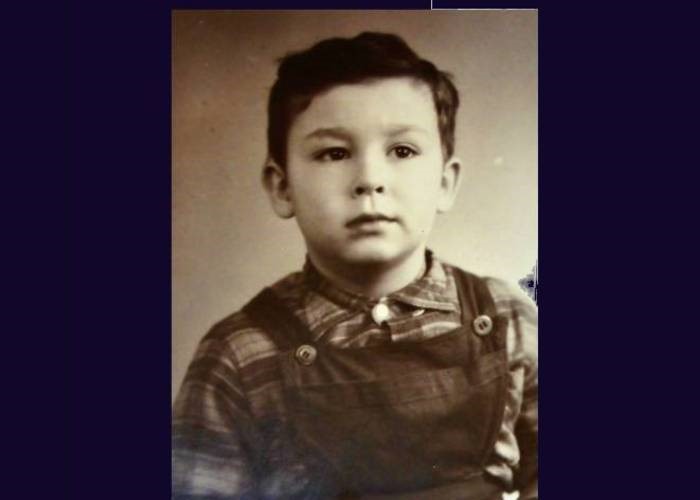
He was red-haired and thin, with protruding ears and shoulder blades.
“What roosters, Kostya?”
But Kostya has already forgotten about the roosters; he was thinking about his dad again.
“Kostya,” his mother called, “don’t fall asleep on the way. Take your bundle.”
They traveled with a bundle and a suitcase.
His mother carried the suitcase because it was heavy and she was strong.
Kostya, at eleven years old, was almost as tall as his mother, but she wouldn’t let him carry the suitcase.
“On the way back,” she said, “you’ll be a month older.”
“Kostya and I are going to Vorkuta. For a month,” his mother announced to the family.
The family fell silent and lowered their heads.
At the time, Kostya didn’t know why.
But he knew many other things. Everything he was taught at school and everything he read in books. It’s a pity that there were no books left in their house; they were all used to heat the stove. But Kostya remembered almost everything he had read by heart.
That’s because he had a “phenomenal” memory.
That’s what his teacher at school said.
The teacher’s name was Maria Ivanovna, she was very kind, and the children called her Marusya.
And Kostya was named Kostya in honor of his grandfather.
His grandfather died young; he was handsome until his death, and also, he was an architect.
And you could see from the portrait that he was an important person.
The portrait of Kostya’s grandfather hung in the second place of honor at his grandmother Olga Ivanovna’s house.
The first place of honor was occupied by a dark icon.
The icon was dark around the edges, but inside, it was as if there was light, coming from the divine face and especially from the eyes.
Little Kostya was afraid that if he looked at the icon for too long, it would pull him in and he would disappear.
Once, Kostya really almost disappeared — his mother told him; it was during the evacuation. She almost lost him.
She got off at the station to get some boiling water, and the train suddenly started moving.
Luckily, she made it back in time.
Kostya’s grandfather died long before the war, of pneumonia, which is a disease you get when you fall into the Volga in the spring because your yacht capsized.
Kostya already knew what a yacht was, and when he would grow up, he would study to become an architect and sail on a yacht, too.
“Kostya! What are you dreaming of? It’s time to go.”
Mom, in a quilted jacket and a gray scarf around her head and neck, looked like a duck. She looked at him with tired eyes.
And he himself didn’t know what he was dreaming about.
Or did he?
The problem was that Kostya’s thoughts ran so fast that one thought overtook another, and while the person Kostya was asking the question was still scratching his head, Kostya had already got his answers.
But he had beaten the whole yard at chess, and the yard was made up of legless Uncle Pasha, Filka the Thief, and Abram the Bald.
By the way, Bald was not a nickname but a surname.
And Filka was not a thief at all, but on the contrary, a good person.
And Uncle Pasha lost his legs in the war — that’s what Mom said. Since then, he has been moving with the help of a riding board, with “irons” in his hands.
Kostya didn’t know how it was possible to lose one’s legs, but he had his guesses, and he tried not to think about it because he was afraid of everything that was scary and painful.
“Why do you go to work?” little Kostya used to ask his mom.
“To treat people,” she replied.
“Is it scary? Does it hurt?”
“Sometimes,” his mom would say.
“Then I don’t want to work like you,” Kostya would declare after some thinking. “And I don’t want to be like Dad, because Dad is far away in a camp. When I grow up, can I work like Grandpa Kostya?”
“Yes, you can,” his mother would reply and wipe away her tears.
Mom rarely cried, only when Kostya asked about his dad.
So he tried not to ask too often.
Once he was afraid that his dad didn’t exist at all and never had, and that all the stories about captivity and the camp were made up so it wouldn’t be so painful.
That time, he came to his mom, hesitated, and mumbled:
“Mom, tell me…”
“Yes?” she raised her head.
Everyone was already asleep—his grandmother under her icon, his father’s sister with her daughter Lenochka.
Lenochka was called Manyunya at home. She was cheerful and curly-haired, and Kostya loved her very much and dreamed that when they would grow up, they would get married, but now he had no time for Lenochka.
His mother sat with her shoulders hunched, her old winter coat spread out on the kitchen table in front of her.
“What are you sewing?” he interrupted himself, not because the thought had escaped him, but because he couldn’t bring himself to ask about the other thing.
“A coat for you for the winter,” she replied briefly and bowed her head again.
“That’s good,” he nodded.
He paused and stood nearby.
“That’s good,” he repeated. “That means we can go to Dad’s in the winter.”
That’s how this idea came about—to go to Dad’s.
Mom gasped, then picked up on his thought, gave a great hug to both of them—that is, to Kostya and his thought—and started getting ready.
She took a long time to get ready; she needed money and alcohol for the trip. Kostya knew about the money but not about the alcohol.
However, one day he saw them bring frozen Uncle Pasha in from the street, and his mother said:
“He drank alcohol and almost died.”
Kostya was afraid to ask his mother why she needed such dangerous alcohol for the road, which could easily kill her, so he hid this question, like many other ones, deep in his mind to ask his father.
When they meet.
He often thought about their meeting at night before falling asleep, lying there, and imagining, imagining.
For some reason, Kostya thought that his dad was as tall as the ceiling and knew answers to all questions.
During the fall and winter, his mother worked so hard that she lost weight and turned pale, and Kostya began to fear that when they arrived at his father’s house, his father would not recognize her.
But then he would not recognize Kostya either, because the last time they saw each other was on the very day the war began, and ten years had passed since then.
Winter passed, and one evening, when spring was already splashing the sky in puddles and sparrows were begging for bread crumbs outside the windows, Mom announced to the family:
“Kostya and I are going to see Borenka. To Vorkuta.”
Everyone froze and fell silent.
The next day, the children in the classroom fell silent, and even Marusya stammered and blushed when Kostya announced at school that he was going to visit his father in the camp soon.
So Kostya understood that the camp was something to be ashamed of.
But he didn’t know why yet.
“I’ll ask Dad,” Kostya thought, “about alcohol, shame, and everything else.”
Kostya jumped off a train step, the thick knot hitting him painlessly on his back. The conductor slammed the iron door, and no one else was left in the car.
Kostya craned his neck and looked around, but saw nothing that resembled a train station.
He exhaled in disappointment, a cloud of ice flying out of his mouth.
“Mom,” he called after his mother, who was scurrying along the platform with a suitcase, “Where is spring? Is there no spring in Vorkuta?”
“Probably not,” she shrugged, “Let’s hurry, we need to see the stationmaster.”
Then there was a long wait, some people in uniform but without epaulettes, the stationmaster himself, a short man with eyes hidden under his cap, and there were also papers, lots of yellow sheets with stamps, and finally the first bottle of alcohol, which his mother handed to the stationmaster who hid it.
Kostya knew that they had three such flasks with them; his mother said that they were “worth their weight in gold.”
The only golden thing Kostya had ever seen was his grandfather’s watch, which looked like a shining onion, but it had long since been exchanged for bread and sugar, back when Lenochka fell ill and nearly died.
“Kostya!” It turned out that his mother had been calling him for a long time, but he, as always, was lost in his thoughts and…
“Kostya,” she ran up to him, out of breath, “Let’s go quickly! There’s a car…they’ll take us. I’ve arranged it with them. Wait!”
She looked around.
“Where’s your bundle?”
Kostya’s bundle was indeed nowhere to be found. His mother first threw up her hands, then clasped them, then started sniffing and rushing around the waiting room.
Gloomy people around them looked at his mother suspiciously and pressed their own bundles to their stomachs.
Kostya stood with his head bowed, waiting for his mother to start scolding him, trying to remember where he had lost the bundle, but his head was foggy and delicious thoughts flashed through it.
The fog was like a cloud that flew out of his mother’s mouth with every lament.
The delicious thoughts were about hot, unsweetened tea and a piece of bread, preferably black, preferably with salt.
It was way too cold there.
“Citizen, is this yours, by any chance?” a voice rang out, seemingly quiet, but for some reason everyone around heard it.
Kostya looked back.
A strong looking man in a quilted jacket and high army boots approached his mother. He had gray eyes and a completely bald head.
In one hand he held Kostya’s bundle, in the other, a thick folder with papers.
His mother grabbed the bundle, pressed it to her chest, and now stood in front of the man, looking at him as if she were waiting for something.
“Thank you.” Kostya guessed what his mother wanted to say but for some reason she couldn’t, so he stepped forward and said it for her.
Mom nodded, still silent.
“You’re welcome. You left it in the station manager’s office. I came in after you and saw it.”
Mom nodded again and cried, just as silently.
The man looked at Kostya and shrugged.
“Well, I’ll be going. Take care of your mom, kid.”
He turned and left the waiting room, heading out onto the street.
Only his bald head flashed by, and then it, too, disappeared into the clouds of either frosty air or smoke.
Chapter Two
The car was cramped, smelled of cheap tobacco, and shook violently.
There were gaps between the body of the car and the tarpaulin, and the wind, with small snowflakes, blew in, as if it, too, was in a hurry on some business, perhaps even a secret business.
“Don’t tell anyone where we’re going,” his mother said before they left. “It’s a secret, you understand?”
Kostya nodded and didn’t admit that he had already blabbed about it at school.
“Why is it a secret?” he asked, his eyes lighting up. “We’re scouts, right?”
“Not exactly. But it seems that way,” Mom replied seriously, pressing her lips together to keep from laughing.
Kostya loved looking at his mom’s face.
It was beautiful and ever-changing.
It was like reading a book.
Books were like food to Kostya. He thought about them all the time.
His favorite, of course, was The Count of Monte Cristo. First, because the story was interesting; second, because it had a happy ending; and third, because the Count of Monte Cristo was very similar to Kostya’s dad: he was just as strong and kind.
Lately, Kostya had nothing to read. He had long since read all the books in the school library, and the ones at home had gone into the stove.
They had a fancy stove called a “burzhuika”**, and one day his mom brought home a mangled pile of iron from somewhere, and Uncle Pasha said:
“It’ll do.” He fixed it, got it burning, and even decorated the wall behind it with colorful tiles.
Uncle Pasha could do everything with his hands except cook.
He even performed magic tricks, the kind you wouldn’t see in any circus. No wonder the adults said that Uncle Pasha had an eye on every finger.
It was a good thing that Uncle Pasha lost his legs in the war and not his arms. Otherwise, who would have built them such a magnificent stove?
The car shook, Kostya snuggled up to his mother’s warm side and fell asleep.
Kostya rarely had dreams, and when he did, they were mostly about food, but this time he dreamed about his father.
It was as if he was standing in front of Kostya, his arms wide open, about to pick him up and hug him.
Tall and strong, so strong that he radiated warmth.
His father was wearing army boots and a white sheepskin coat, like the bald man who had found Kostya’s bundle at the train station.
Kostya would like to run to meet his father, but his feet seemed to be rooted to the ground. He looked down and saw that it was not the ground, but something black and shiny.
“Coal,” Kostya guessed, trying to move his feet but unable to do so, as if they had become stuck, as if he had always stood there, since his birth.
His mother had told him about coal.
Once, when Kostya had pestered her with questions, she said that his father and his comrades lived far away, in the north, in a camp where coal was mined.
“What is a camp?”
“A big house. Made of wood.”
“What is coal?”
“Black gold.”
“And do you need a lot of it?” Kostya couldn’t settle down.
“Coal?” His mother smiled and pursed her lips bitterly. “A huge amount. They won’t rest until they’ve dug it all out of the ground.”
“Who won’t rest?” he continued to pester her. “His comrades?”
“His comrades,” his mother agreed and turned away so as not to show her tears.
Kostya kicked his legs-—no, the black coal wouldn’t let go. He bit his lip in frustration, raised his head, looked around, wanting to call his father for help, but he was already gone. Only some old man was walking in the distance, hunched over and barely dragging his feet. Not his father. Not his father at all.
Kostya opened his mouth and was about to scream, but then the car shook one last time, he woke up, and the scream remained in his throat.
The car stopped, the people around him were stirring, climbing out the back.
Brrr, it was cold here, and so gray.
Kostya jumped out, his feet sinking into the black slush–snow mixed with coal dust. The bundle pushed him in the back, as if to hurry him along.
“Hurry up, Dad’s waiting.”
Kostya matched his pace to his mother’s, and they trudged through the sticky slush, each lost in their own thoughts.
Mom was thinking about his dad.
Kostya thought of the stove, the one that was left at home. He wished he could rest his palms against its side now. Oh, the sides of that potbelly stove were so hot, they stung, but the wall behind the stove was covered in colorful tiles, and among them was one with a cheerful bird.
These tiles were called izrastsy, and he would stand and look at the patterns endlessly, especially if he had just come in from the street, running, his nose and cheeks still icy, but his thoughts already warm.
They walked for so long that Kostya got tired of thinking about the stove and started looking around.
Despite it being spring, there was a lot of snow, and it seemed like it would never melt.
The people they had traveled with in the car were walking nearby.
They were soldiers in sheepskin coats, but without weapons. They joked and talked among themselves, smoked and spat. Some of them had
equipment that Kostya didn’t understand, mostly spools of wire.
“Mom,” he asked quietly, tugging at her sleeve, “Mom, who are they? Are they scouts too?”
“Sure!” replied one of the men walking near them.
Kostya looked up.
The man winked at him, with a cheerful black eye.
“We’re signalmen,” he boomed in a hoarse voice, “and signalmen are the most important scouts, you know.”
Kostya cheered up and was about to ask about his father (my dad, his name is Boris, have you heard of him?).
But then a dark column appeared ahead.
People were walking along a wooden platform, fenced off from Kostya and the rest of the world by barbed wire. They looked like rooks, with
faces as black and sharp as beaks, their wings folded behind their backs, one, two, one, two, chatting.
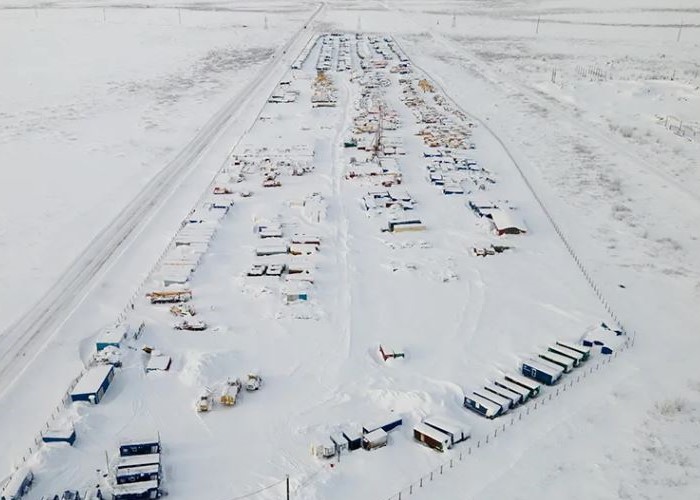
There were many of them, so many that they seemed endless, walking for a very long time, all the way to that wooden tower in the distance, to the low houses around it, to the barking of dogs from the northern pasture, to the fragments of frosty air, and perhaps even further, to where the snow turns from black to white and never melts.
The bird-people passed by quietly, like shadows, disappearing into the clouds of frosty air.
Kostya wanted to ask his mother who they were, but he didn’t have time because they had reached their destination. His mother pushed open the creaky door, and the smell of sweat and tobacco hit Kostya’s nose, as if someone had spilled strong tea and not wiped it up for a couple of years.
“Comrade Burov!” Mom spoke so quitely that she seemed to become shorter. “Comrade Burov, I was told to speak to you, specifically.”
The man standing opposite them looked them over and frowned.
He was wearing a gymnasterka with red epaulettes, a uniform Kostya had never seen before.
”Is he a general?” he wondered.
Another bottle of alcohol stood on the table, and next to it, lay a bundle. Kostya couldn’t see what was inside, but he guessed it was money.
“Correct,” replied the frowning man in an unexpectedly thin voice. “Only the circumstances have changed. Three days. You have three days. You will live with Savishna. I will show you.”
“No, he is not a general,” thought Kostya, “A general’s voice would be deeper.”
“We’ll arrange a meeting tomorrow,” continued the red-coated man, “First, come to the personnel department, as if you were applying for a job. From there, you will be taken to the right place.”
Mom wanted to say something, but her lips wouldn’t obey her.
So she just nodded.
Burov locked the alcohol and money in the safe, threw on his coat Kostya picked up his bundle, and the three of them went out the door, where the snow crunched and the air swirled into white balls, climbing up to the distant watchtower, staring with an icy eye at the bare tundra, the low, flat houses, the people who looked like black birds, and at Kostya himself.
“Oh, I wish I could grow up quickly,” he thought, “and have beautiful epaulettes, boots that squeak, and a warm sheepskin coat.”
And what about the stove?
He would build a stove no worse than Uncle Pasha’s, why not? If only he could warm up now.
If only he could put his frozen hands on those colorful tiles… especially on the one with a cheerful bird…
Chapter Three
“As if you don’t know what’s going on in Khanove. It’s all because someone very clever decided to put the ‘muzhiks’** together with the thugs in the same barracks. Now they don’t have enough of their own guards to calm down the discontented, so they sent a detachment from Moscow. Watch out, it’ll reach us too.”
Angry voices were heard through the loosely closed door, covered with leatherette.
One thin voice was, of course, Burov’s.
The other sounded familiar, but where would Kostya could have heard ithere?
“It was always peaceful here in Rechlag,” continued the same voice, “And why is that?”
Burov said something, but Kostya couldn’t hear it.
“No, that’s not why,” replied the other voice. “It’s because people are brought here to work. And if you bully them, who will want to go down into the mine? Maybe you?”
Burov raised his voice in response, but his words were indistinct.
“The main thing for me is for the mine to give coal,” said his interlocutor, as if cutting him off. “And don’t threaten me. I’m not easily frightened. They won’t send me any further than Vorkuta. And even if they do, the mine will be left without a chief engineer. Do you know who will be punished for that?”
The door swung open even wider, and the bald man whom Kostya remembered from the train station appeared from the office, slammed the door, walked past, almost hitting them with the hem of his sheepskin coat, and was about to curse, when he noticed his mother.
His looked at her, then at Kostya.
“Why bring kids here?” He shook his head, waved his hand, and left the barracks.
Mom and Kostya had been waiting in the back room for quite a long time.
Burov had told them to come at 10, and now it was almost 12.
They sat silently, huddled together, and what was there to talk about, except perhaps for Kostya to say:
“Mom, Mom…”
“What is it, Kostya?”
“When I see Dad, can I touch him?”
“I think so,” she replied, looking at Kostya with serious eyes. “Touching is very important.”
“What if there are dogs there?”
“So what?” She shrugged and said something completely incomprehensible:
“Dogs aren’t people.”
Then she put her hand on his head and added in a warm voice:
“And there won’t be any dogs there. Don’t be afraid. Never be afraid of anything in advance, understand?”
Kostya didn’t understand how it was possible not to be afraid of dogs, especially those that had walked alongside the column of those black-looking people yesterday, walking quietly, like shadows, moving their paws quickly and lowering their heads with their sharp ears to the ground.
Kostya didn’t understand, but he nodded, especially since he could ask his father about the dogs too.
“How long will we be… talking to him?”
Mom looked at him intently.
“Even if it’s not long, that’s not important.”
“Then what’s important?”
But then the door swung open again and Burov appeared in the doorway.
“Ah, you’re already here,” he said, grimacing as if he had a toothache. “All right. Kid, you come with me. I’ll tell them your son is here, and I’ll take him to wash up. We have showers at the mine. You wait here,” he said to his mother, tightened the belt on his sheepskin coat, and left the barracks and headed into the frosty fog, without looking back.
Kostya jumped up and looked at his mother.
“Go, go,” she encouraged him, “Remember everything he says! Tell him I’ll come tomorrow. Go on, now.”
And she took him by the shoulders, turned him toward the door, and gave him a gentle push.
Kostya swallowed his fear and followed Burov.
First they walked along the houses, then past the guards, to where the barbed wire and wooden planking began.
It was a sunny day, the snow sparkled and shimmered so brightly that it hurt the eyes, and in the distance you could see mountains with black and white caps.
Whether it was the sun or the prospect of a close encounter, Kostya cheered up. He ran along behind Burov, thinking that soon, for the first time in his life, he would see his father, because what happened before the war didn’t count—-he was less than two years old then and didn’t remember anything.
“It would be nice if my father looked like that bald one in the sheepskin coat,” Kostya thought as he walked. “And he should definitely be tall, and also…”
“Here we are,” Burov stopped and looked sternly. “For those in uniform–if they ask–you are my son, remember that. I came to visit. For the rest, it doesn’t matter.”
Kostya looked around.
There was a large trampled area, with low buildings around the edges and barbed wire and towers all around.
Off to the side, closer than it had seemed yesterday, were the barracks where the dogs were barking.
It was quiet there now, apparently there was no one to bark at, Kostya guessed, Everyone had gone to the mine.
“Where’s the mine?” he asked Burov.
“Over there,” he waved his hand toward the tallest tower, which looked like a house with legs, “But we don’t need to go there, your father works outside.”
And he added for some reason:
“He’s a surveyor.”
Kostya thought that Surveyor was a surname and felt upset.
All the kids at school had normal surnames, and only Kostya was Schwartz. They even laughed at him sometimes because of that. And now here you go — “Surveyor”. Again, not Russian. Could it be that they were laughing at his father too?
“What’s your name?” he asked timidly.
“I’m Comrade Burov,” he replied. “Why do you ask?”
“Well, if someone asks whose son I am, what should I answer?” said Kostya, even more intimidated by the fact that Burov didn’t understand simple things.
“Ah, that’s what you mean,” he smiled, squinting. “Well, well, you’re a smart one. You people,” he spat angrily into the dirty snow,
“you all are way too smart. All right. I’m Yevsey–remember it! Papa Yevsey.”
Kostya nodded.
He didn’t like the name. It was muddy. Boris was different. Real, fatherly. Well, when?
Burov pushed the door open.
They entered a dimly lit room, then a corridor, another door, then another, and finally at the very end — a long room, like a pencil case, with wooden tables along the walls, people in black padded jackets sitting at the tables, bent low, drawing something, you can’t tell what, cold sunlight streaming through the windows, illuminating thin faces and maps and papers spread out on the tables.
Burov stopped at the threshold, but Kostya, because he was walking quickly, barely keeping up with his escort and waving his arms instead of stopping, jumped into the middle of the room and froze there.
“Here. I brought him. I’ll be back in an hour. And no nonsense,” Burov spat out the words, turned, left, and closed the door tightly behind him.
The people sitting at the tables started getting up and coming closer, quietly, slowly
Their faces were all the same, and Kostya began to wonder which one of them would take him further, to his father.
He remained silent, looking around, but he wasn’t afraid.
“Kostya?”
The voice was hoarse, and perhaps that was why it broke.
“Kostya?” The voice coughed and repeated.
Kostya looked back and saw the person who had come closest to him.
The man smiled crookedly and timidly, and Kostya saw that he was missing his two front teeth.
But his eyes were kind.
He had a thin neck with a sharp Adam’s apple and black fingers.
He was also short, which meant he couldn’t be his father, and Kostya was almost disappointed.
“I’m looking for my dad,” said Kostya, deciding that he could trust the toothless man. “His name is Boris. His last name is difficult, I don’t remember it.”
“My last name is Schwartz,” the man smiled. “Just like yours, son. Look how you’ve grown.”
Kostya wanted to shake his head and run away, but he was embarrassed, and there was nowhere to go.
Burov said he would come back in an hour.
I wish he would hurry up.
Because there was a mistake, and this was not his father at all, it couldn’t be him.
Small, gray, toothless. What kind of dad is that?
The man came closer and reached out his hand, touching Kostya’s shoulder.
“Touching is very important,” Kostya remembered his mother’s words and suddenly began to cry.
“Cry, cry,” he heard the toothless man’s voice, “It’s okay. It helps. It gets easier afterwards. How is Mom? She’s crying, too, I bet?
Kostya shook his head.
“No,” he lied for some reason, and then asked, “Are you really my father?”
“Yes,” replied the toothless man.
Kostya wiped his eyes and looked around again.
People with dark faces stood silently at a distance.
“They’re remembering their sons,” Kostya guessed.
“He’s not that short,” Kostya thought, without looking at his father. “He’s of normal height. No shorter than those others over there.”
Then he sniffed and said:
“Tell me. Do you have a library here?”
“Yes,” his father nodded, “Why do you ask?”
“I don’t know,” Kostya said, embarrassed, “Are there many books?”
“Lots,” he smiled. “A lot of people came here. And everyone brought his favorite book.”
“Which one did you bring? Which one is your favorite?” Kostya asked, still feeling shy.
His father shrugged.
“I don’t remember anymore.”
“How can you not remember?” Kostya suddenly became agitated. “Don’t you have that… phenomenal memory? If you’re my father, then you should be just like me.”
The men around them smiled.
His father smiled too.
“Phenomenal. Exactly.”
Then the door flew open and Burov reappeared in the doorway.
“Inspection from Moscow,” he said, looking around the room. “Quickly, everyone back to your places. And you,” he said to Kostya, “come with me.”
We’re going back.”
Kostya clung to his father’s sleeve and forced himself to look at the completely unfamiliar face.
“Well? Do you remember it now?”
His father hugged him, held him close for a second, and froze.
And only then, as Kostya was leaving, did he call after him.
“I remember! Monte Cristo! My favorite book is The Count of Monte Cristo.”
Kostya nodded and exhaled with satisfaction:
“That’s my dad!”
He rushed out into the street, where the air was so cold you could cut it with a knife, and the mountains shifted from foot to foot to keep from freezing, and ran to his mother to beg her to come here again.
And best of all, not to leave at all.
___
*roosters on sticks – lollipops
**burzhuika (literal translation: “bourgeois”) – а potbelly stove is a cast-iron, coal-burning or wood-burning stove that is cylindrical with a bulge in the middle. The name is derived from the resemblance of the stove to a fat person’s pot belly. The flat top of the stove allows for cooking food or heating water.
***“Muzhiki” was the nickname criminals gave to political prisoners.
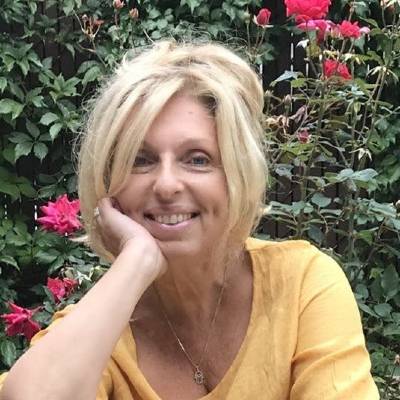
Lada Miller is a writer and a poet. She has authored six books and won several awards, including the Ernest Hemingway Award 2020 from the New World magazine (Toronto, Canada).
“A book should serve as the ax for the frozen sea within us.” (Kafka)
A new collection of poems by Andrey Gritsman. In English.
The new poetry collection from Wayne Pernu, one of the finest poets writing in English today. This is one of those rare collections that calls to mind the great masters—Donne, Keats, Yeats.
Comedy and tragedy collide in stories of family life in Soviet Russia and the complexities of the immigrant experience