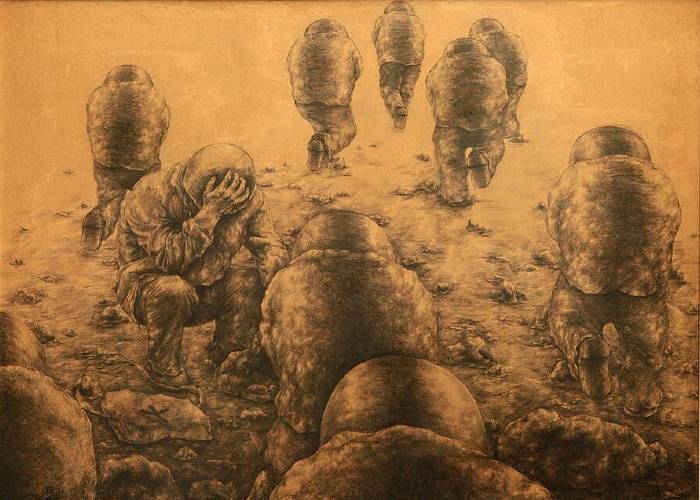
Nina Kossman. You’ll have a good sleep where we’re going to lie down together.

Also in World:

babiyar6b_0 (1)
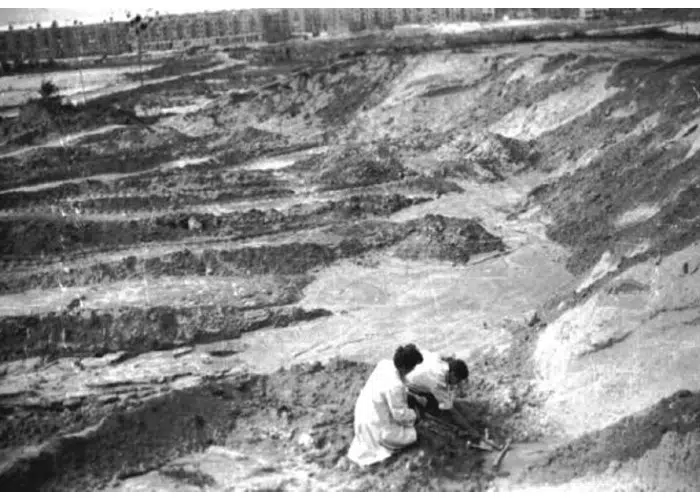
A general view of Babi Yar in 1961. From the archives of Yad Vashem via Emmanuel (Amik) Diamant.
Nina Kossman. You’ll have a good sleep where we’re going to lie down together.

 
Babi Yar
 
Where’s your good-for-nothing sister, said his mother.
Today we are going to die together, as a family.
Don’t you hear, the Krauts are knocking at the door again!
Collect yourself quickly, and why take so many books.
Where you’re going, you’ll manage without them.
You’re always the last one, son, said his mother.
Time to get ready, and now you want to sleep!
You’ll have a good sleep where we’re going to lie down together.
Rather than slip books in your bag, find your sister.
Well, what a fool you are, indeed, what station?
There’s your sister, found at last, the whole family lies here together.
And the one who led their column to slaughter
lived to collect his pension, to have grandchildren
and even great-grandchildren, all of whom are so sensitive,
they’d be hurt by talk about some sort of forest,
so what, aren’t there all kinds of forests in the world,
so what, no one is going to rise from there,
so don’t talk about how he aimed for the mother,
and about how her youngest boy wanted to sleep,
and how his body fell on the mother’s, and how the books
and some chalk dropped from his hand onto the bodies . . .
Keep silent, why tell the grandson about that forest.
 
* * *

The Original
 
Где сестра твоя непутёвая, говорила мать.
Сегодня мы всей семьёй идём умирать.
В дверь, слышь, фрицы опять стучат.
Собирайся быстрей, зачем тебе столько книг.
Там, где мы будем, обойдёшься без них.
Всегда ты последний, сынок, говорила мать.
Ну вот, собрались, а теперь ему хочется спать!
Выспишься там, где будем вместе лежать.
Чем книги в мешок совать, сестру б отыскал.
Ну что за дурак, в самом деле, какой вокзал?
Вот и сестра нашлась, лежат всей семьёй.
А тот, что колонну их вёл на убой,
до пенсии дожил, до внуков и даже до пра-,
у внуков натуры тонкие, не надо их тра-
вмировать болтовней про какой-то лес,
что с того, да мало ль на свете мест,
что с того, что овраг, ведь никто не воскрес;
а про то, как дед их метился в мать,
да про то, как младшему хотелось спать,
а когда упал на мать и из рук выпал мешок,
посыпались на тела книги да какой-то мелок…
Молчите, зачем вы внуку-то про ваш лесок.

 

About the Author:

Nina-old-profile-from-Zoom
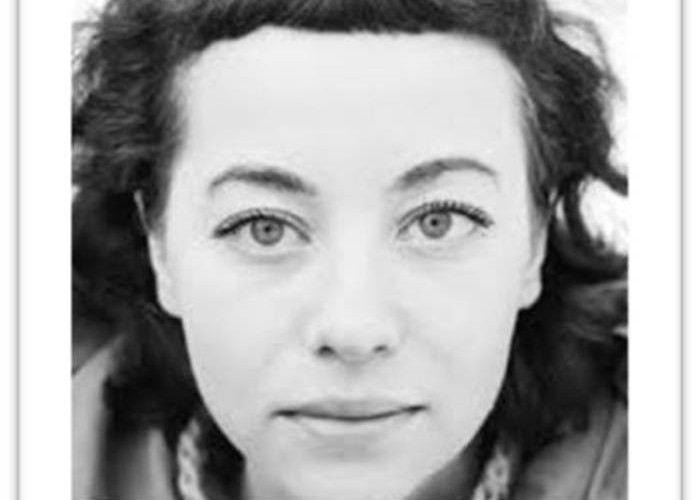
Nina Kossman
New York, USA

Nina Kossman’s eleven books include three books of poetry in English, two books of poetry in Russian, two collections of short stories, a memoir, a novel, an anthology she edited for Oxford University Press, and two volumes of translations of Marina Tsvetaeva’s poetry. Her English-language work has appeared in over ninety magazines and anthologies and has been translated into many languages, including French, Italian, Greek, Hebrew, Spanish, Danish, Dutch, Persian, Chinese, and Japanese. Her plays have been produced in several countries. Her work in her first language, Russian, was published in Russian-language periodicals in and outside of Russia. She is a recipient of an NEA fellowship, UNESCO/PEN Short Story award, grants from the Onassis Foundation, the Foundation for Hellenic Culture, etc.
Nina Kossman Нина Косман
Bookshelf
Version 1.0.0
by Nina Kossman


A new book of poems by Nina Kossman. “When the mythological and personal meet, something transforms for this reader…” -Ilya Kaminsky

Olga Stein cover
by Olga Stein

A collection of poems by Olga Stein.

Naza image
by Naza Semoniff

This isn’t self-help. It’s not a parody either. It’s something stranger and smarter: a satirical, uncategorizable book about belief, leadership, algorithmic power, and the performance of divinity in modern life.

book one
by Sergii Mazurkevych

From the myths of the ancient Near East to the secluded palaces of forgotten empires, Harems: Origins and Eunuchs uncovers how the idea of the harem first emerged — not only as a symbol of power and beauty, but also as a reflection of human desire, faith, and control. With the precision of a historian and the sensitivity of a storyteller, Sergii Mazurkevych traces the hidden world of eunuchs, devotion, and intrigue that shaped entire civilizations. A thoughtful and visually rich journey into one of history’s most secret institutions.

Videos
Play Video
EastWest Literary Forum Bilingual Poetry & Prose Reading. July 13, 2025.
Length: 2 hrs. 08 min