Sergey Plotov. “Back home this was risky—here, just absurd.” Translated by Maria Bloshteyn

Also in World:

1. best photo immig.
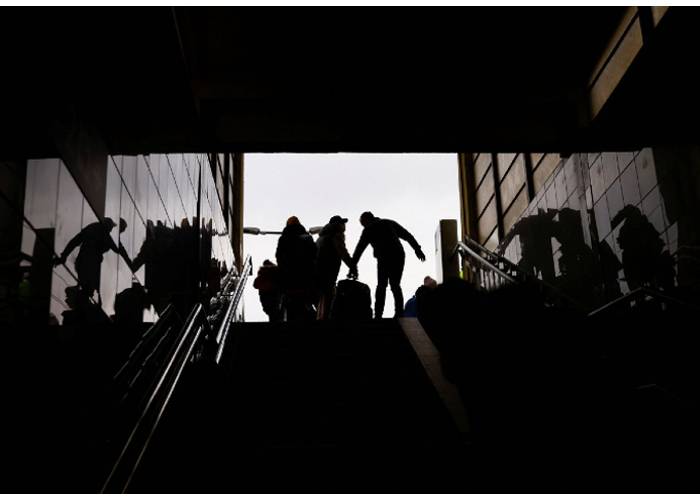
Refugees climb stairs to reach the platform at the train station after fleeing Russian invasion of Ukraine, in Przemysl, Poland.
Sergey Plotov. "Back home this was risky—here, just absurd." Translated by Maria Bloshteyn

 
Who is at fault?.. What’s to be done?.. Where to turn?

Pick up your luggage in Stambul, Harbin, another town?

A dozen people care about you back in Russia,

outside of it, not one.
 

Unfamiliar letters don’t gel into words.

Belt out a song of protest, refugee-songbird!

Let’s hear something bitter and vicious…

Back home this was risky—here, just absurd.
 

Fill your mouth, free of native soil, with water

from the Bosphorus, Red Sea, or the Hudson.

Step out on the shore and keep your eyes glued

to the horizon.
 
***
 
Кто виноват?.. Что делать?.. Куда идти?..

Где получать багаж – в Стамбуле или в Харбине?

Ты и в России-то нужен максимум десяти,

А на чужбине…
 

Непривычные буквы не складываются в слова.

Ну-ка, забацай, беглец-щегол, песню протеста.

Ну-ка, позлее чего-нибудь нам слабай…

Но там твоё пенье опасно, а здесь – неуместно.
 

В рот, не набитый родной землёй, набери воды

Босфора, Красного моря, или Гудзона.

Выйди на берег и взгляда не отводи

От горизонта.
 

About the Author:

1. сергей плотов
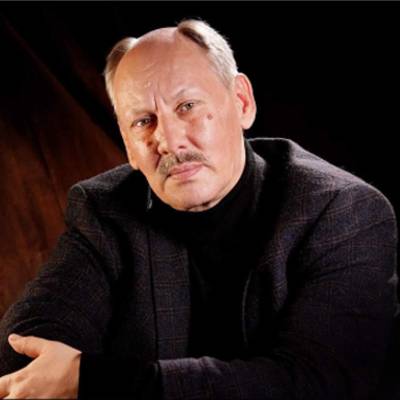
Sergey Plotov
Omsk / Moscow, Russia

Born on May 25, 1961, in Omsk. Studied acting, worked in theaters in Khabarovsk and Chelyabinsk. In 2005, Sergey moved to Moscow. He is well known as a scriptwriter and playwright. His plays are produced in Moscow’s leading theaters. He has been writing poetry since the age of 15.

About the Translator:

1. Maria Bloshteyn photo1
Maria Bloshteyn
Toronto, Canada

Maria Bloshteyn is a literary scholar, editor, translator, and essayist. She was born in Leningrad and she grew up and lives in Toronto. Maria studied Dostoevsky’s impact on American culture and is the author of The Creation of a Counter-culture Icon: Henry Miller’s Dostoevsky (2007). She is the translator of Alexander Galich’s Dress Rehearsal (2009) and Anton Chekhov’s The Prank (2015), as well as the editor and the main translator of Russia is Burning, a collection of Russоphone poems of World War II (Smokestack Books, 2020). Her poetry translations have appeared in journals and anthologies, including The Penguin Book of Russian Poetry (Penguin Classics, 2015).

Sergey Plotov Сергей Плотов
Bookshelf
71cXomHXV7L._SL1500_
by Mark Budman

After a century of brooding and talking telepathically to his Mausoleum janitor from his glass coffin, Vladimir Lenin awakens—alive and bewildered in the modern world.

629285321_1293200506022560_7049761535591991609_n
by Zinovy Zinik

When Clea returns to London with her new Russian husband, she is surprised to see him become even more eccentric.

Naza s book
by Naza Semoniff

A haunting dystopia some readers have called “the new 1984.” In a society where memory is rewritten and resistance is pre-approved, freedom isn’t restricted; it’s redefined. As systems evolve beyond human control and choice becomes a simulation, true defiance means refusing the script, even when the system already knows you will.

Other Shepherds: Poems with Translations from Marina Tsvetaeva by Nina Kossman
by Nina Kossman

Original poetry by Nina Kossman, accompanied by a selection of poems by Marina Tsvetaeva, translated from Russian by Kossman. “The sea is a postcard,” writes Nina Kossman. There is both something elemental in this vision and—iron-tough.” —Ilya Kaminsky

Videos
Length: 2 hrs. 08 min
Recorded: July 13, 2025