Of course, I know the Tatars. I am from Samara, after all, and half of the place names there are Tatar—Kinel, Tashla, Isakly, Kamyshla, etc.
(True, there is also a village called Ukrainskaya not far from Samara. It has white, clean houses and sunflowers—just like in Gogol’s stories and in Poltava. They moved there in the 19th century and still live there.)
I can speak a little Tatar, because my first girlfriend, Guzel, was Tatar. True, she was of a different type, Bulgarian—copper-colored hair, legs, and all that. But her cheekbones gave her away as Turkic.
So I fell in love with Tatars in the Sverdlovsk prison because that’s where I died.
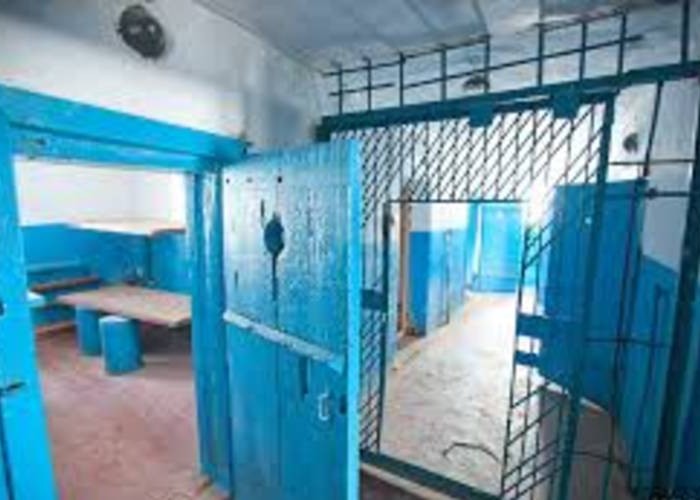
After the bath, they sent us to a transit cell where prisoners were held while being transferred from one zone to another. It was spacious and uncomfortable. A vaulted room with more than twenty bunks, no light from outside—all the windows were covered with blankets for warmth. This was a necessity: almost every window had one or more broken panes. And outside was the Ural winter. Of course, the blankets were of little use—the cell was freezing cold, and we had to keep our winter coats on day and night.
However, the worst of all the inconveniences in the cell turned out to be my neighbor, a strict regime convict named Perminov, who was being transferred for the third time from one Ural zone to another. For some reason, the authorities in none of the zones wanted to keep him. The reason became clear to us very soon. Perminov turned out to be a hard-core psychopath. He was serving five years for drugs, and in prison, he got additional time for attempting to escape and attacking an ensign. Less than an hour had passed when Perminov started arguing with one of his neighbors. This time it didn’t come to a fight—the other prisoner also turned out to be a tough guy and didn’t look like a pushover, so it was limited to shouting. Seeing all this, I prudently took a seat further away.
The reception didn’t help much. A couple of days later, as soon as we were left alone, and the others had left, the psychopath started yelling at me for made-up reasons. It helped when a new group of prisoners arrived on time, because then he would switch his attention to the newcomers. Sometimes it ended in a fight. Perminov was merciless and could easily pull himself up on the bunk and start kicking the prisoner lying on the lower bunk in the face with his boots.
I was stuck in this cell. New prisoners arrived, neighbors changed and soon left for the next zone. The psychopath quarreled with the new prisoners, and as long as someone else was in the cell, I felt relatively safe.
Then a new series of nightmares began. Perminov and I were left alone, and several times a day, he would march past my bunk and yell, accusing me of some imaginary violations of prison rules. I no longer took off my boot and lay down on my bunk, intending to kick him from above if necessary. In the end, a fight broke out. He managed to pull me down from the bunk, punched me in the face with his right fist, and immediately punched me in the chest with his left—he had a sharpened spoon clenched in his hand.
The blow hit bone and was not deep. I got through to the medic and received the Brilliant green from him, but the wound festered, leaving a scar the size of a small coin on my chest. From that day on, I almost stopped sleeping at night—I was afraid that Perminov might knock out my eye while I was sleeping, or even cut my carotid artery. The sharpened spoon was much better suited for this than for stabbing.
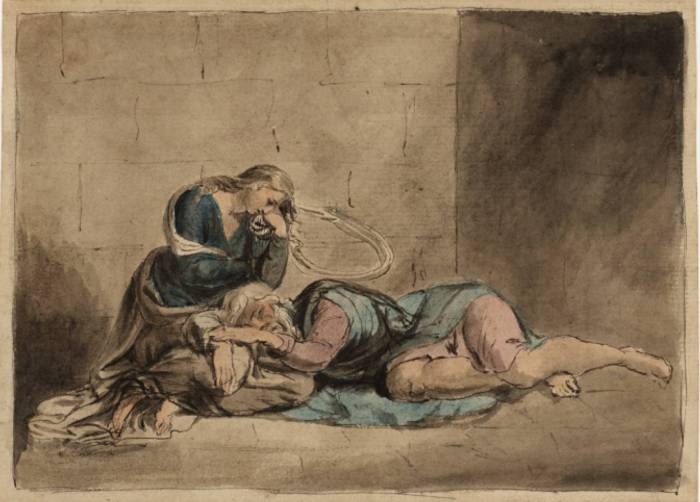
There were many reasons, but the decision I made on December 5 was most influenced by the terrible conditions in the Sverdlovsk transit camp, the hopelessness of the situation, the fear of the impending neuroleptics, and the prolonged wait for a new set of torments. I had a razor blade in my jacket. In the evening, I moved to the lower bunk and took out the blade. On the left side, I rolled up the mattress as much as possible so that the blood would be absorbed and not spill onto the floor.
In the evening, I waited for the inmates to fall asleep. Cutting was painful, so I had to do it quickly—one cut and then another. Warm liquid spread across my body. With my left hand, I tried to find a vein on my right arm, but my weakened hand missed, leaving a cut next to the vein.
The usual ringing in my ears grew louder, drowning out all other sounds and turning into a continuous hum. My consciousness became clouded and floated away. The pain was gone, and my body lost all sensation—or perhaps it was my “I” that was leaving my body. Then the hum began to fade away just as smoothly. A calm darkness descended.
Death comes gently.
A chain of coincidences brought me back to life. One of Perminov’s neighbors got up to use the toilet, which woke him up. Perminov, still half asleep, flew into a rage and demanded with his fists that his neighbor move somewhere else. The neighbor, Shayakhmet, took his mattress and went to my far corner. In the passage between the bunks, he stepped in a pool of blood and rushed to bang on the door, demanding a medic.
The guards reacted instantly to the magic word “cut.” A medic appeared. In the Sverdlovsk prison, cut veins were not an emergency, so they didn’t even bother to drag me to the medical unit. Right there, in the office on the floor, they brought me to with ammonia and slaps, and the medic stitched me up—without anesthesia, of course, but it didn’t matter, I couldn’t feel my body. After all that, they dragged me back to my cell. At the same time, the guards did a quick search and took my razor.
For the next day and a half, I remained in a state between life and death, between delirium and reality. By the evening of December 9, I began to walk and went to the door myself to return the bowl after the evening meal, which I had already eaten. Sitting on the floor, I waited for the guard, who was slowly collecting the bowls from the cells. Above the door, the radio was murmuring, broadcasting the news, which began with yet another “meeting of Comrade Brezhnev with the workers,” followed by reports from the snow-covered collective farm fields. At the end of the broadcast, there was a strange announcement: “According to news agencies, the famous singer John Lennon was killed yesterday in New York…”
Something familiar scratched my brain: who was this “famous singer”? And then I remembered the name. It sounded as if it came from a distant planet—where we listened to Imagine and Mind Games, free and happy. Noisy parties, dancing, girls, and wine—from here, in a cell in a Sverdlovsk prison, it all seemed like a hallucination. The bowls were collected, I lay down on the bunk again, and the piano chords from Imagine played in my head. Perhaps he also heard that ringing in his ears before he died, the same ringing I heard. Only I remained in this world, and he was gone.
The reality around me was terrible, but in that state, the reality of my memory suddenly became more vivid than the prison cell. I remembered everything at once: the joy of music and the mysterious, secret feeling of touching the waist of the girl with whom we danced to Imagine. Life suddenly returned, seeping into the cell with its stale air and the nervousness created by the psychopath. I clearly felt that all the macabre surroundings were just an illusion, and the music playing in my head was more real than everything around me. It turns out that “reality” is not what is “around” you, but what exists inside you.
I came back to life.
The next day, Perminov was finally taken away, and the cell was instantly transformed. The prisoners began to smile, joke, and gather in small groups on the bunks. Shayakhmet helped me with little things, such as dragging my mattress to another bunk. In the morning, while I was still unable to get up on time, Shayakhmet also brought me my ration and a bowl of porridge. The food in the Sverdlovsk prison was disgusting, but I ate it all—my body, resurrected from the dead, demanded calories.
On the twelfth, I was called to the transport. As a farewell gift, Shayakhmet gave me something very valuable—his prison mug, which was, of course, petty theft, but it helped me to avoid suffering from thirst on the journey to the Far East. Shayakhmet himself received a two-year sentence for stealing car parts from the garage where he worked as a driver, and he expected to receive a suspended sentence soon.
Short, bow-legged, and unattractive, this constantly smiling man proved once again the obvious truth that every nation has its scoundrels and its righteous, who are the only ones you can rely on when life takes a turn for the worse.