












Margarita Meklina. The Arctic Circle

Also in Prose:

Margarita-Meklina-s
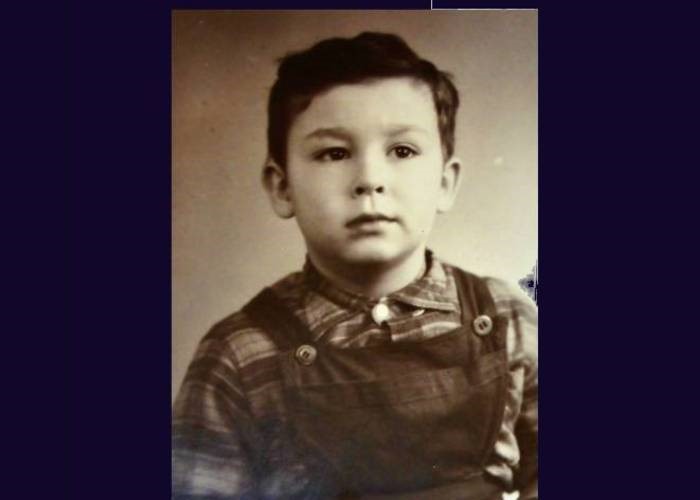
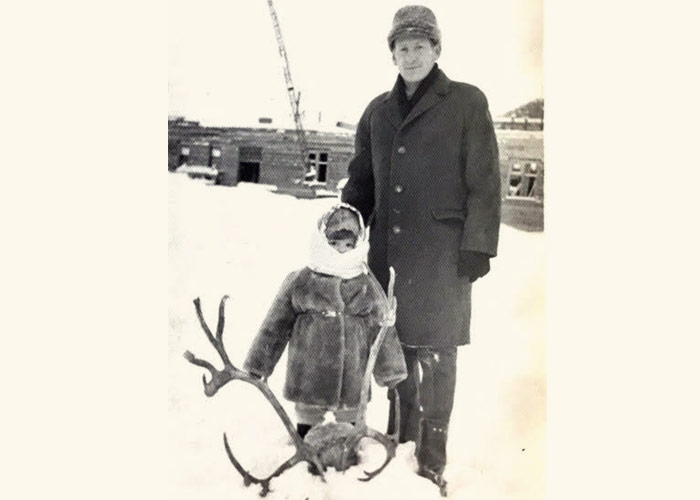
Photo from Margarita Meklina's private archive, settlement Baranikha, Chukotka, 1967
Margarita Meklina. The Arctic Circle

 
Mom didn’t think that your Pobeda watch had any significance except that it didn’t stop when your heart ceased its ticking. Asked what was left, she handed me your cardiogram. She flattened you. You were reduced to a straight line.

Is it proof of the finality of the spirit?

She threw out your glasses and burned your Magadan pictures, except one where you had a full head of red hair.

“Near the Arctic, your father walked hatless. To impress former Gulag convicts? Or reindeer? That’s why he went bald.”

Did it feel ugly to be called “shitface” by her because by immigrating, you, a former mining engineer, became only a lowly janitor? Now she slid into afterlife practicality.

“I put his sneakers into a coffin beside his usual shoes, so he is comfortable where he is!”

Papa, did you know that I was expecting?

Mom didn’t let me tell you, guarding the gates of access to you, promising that she’d tell you herself.

It’s been five months. The memory of you hadn’t left me for a second. I protected what was inside me from cruelty, severing contact with her. But I invited her now.

Did you know that your life wasn’t in vain?

Your first grandson was just placed, clean and dry, into a cot. It is the spitting image of you as a baby.

Mom gasped looking at his red hair.

As though you briefly inhabited him when saying “hi.”

Of course, Papa, you knew.

About the Author:

Margarita Meklina
Margarita Meklina
San Francisco, US

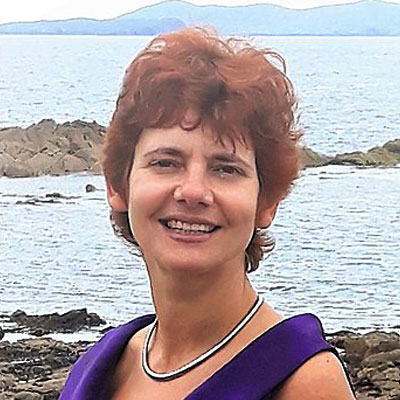
Margarita Meklina is a bilingual fiction writer and essayist born in St. Petersburg, Russia. She came to the United States in the early 1990s and spent twenty years in San Francisco; now she divides her time between Dublin, Ireland, and the San Francisco Bay Area. She received the 2003 Andrei Bely Prize (Russia’s first independent literary prize, which enjoys a special reputation for honoring dissident and nonconformist writing) for her short story collection Battle at St. Petersburg and the 2009 Russian Prize, awarded by the Yeltsin Center Foundation, for her manuscript My Criminal Connection to Art. In 2013, she was a finalist for the Nonconformism prize for her novella Cervix, and in 2014 she was short-listed for NOS, a prize given by the fund of Mikhail Prokhorov for “new social trends” in literature. Author of 6 books in her native Russian, she also completed a YA novel The Little Gaucho Who Loved Don Quixote in English (Black Wolf Edition Publishing LTD, 2016) and a collection of short stories A Sauce Stealer (Spuyten Duyvil, 2017). Translated into French and Swedish, two of her novellas are available as chapbooks: Poussière d’étoiles (Etoiles, 2016) and Linea Nigra (Ars Interpres, 2017). In 2018, she was awarded the Mark Aldanov Literary Prize for her novella Ulay in Lithuania. The prize is given by New York’s Novy Zhurnal to Russian writers living outside of Russia.
Margarita Meklina Маргарита Меклина
Bookshelf
book Queen
by Borys Khersonsky. Svetlana Lavochkina and Oksana Rosenblum, translators

The first bilingual collection of Ukrainian verse by Borys Khersonsky. In these poems, heaven is often the setting: Jews who perished during pogroms and in the Holocaust continue with their daily routines, whereas on earth, displacement has become a constant, and collective memory has been cleansed of the Jewish past.

Iossel book
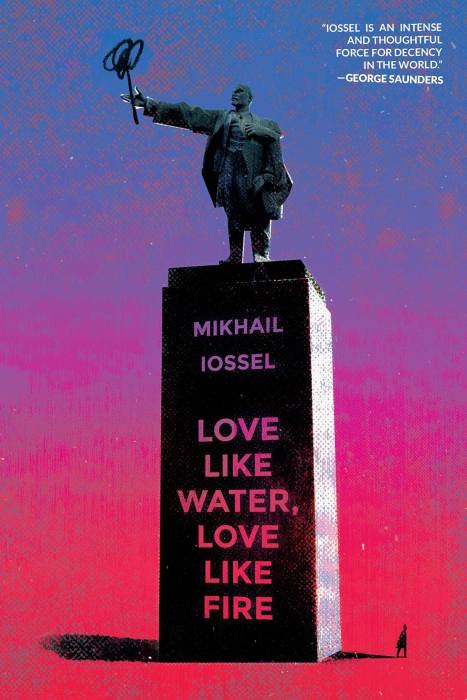
by Mikhail Iossel

The author has found a perfect syntactical solution to the opposition of past and present in this groundbreaking collection of one-sentence stories: everything is simultaneous, breathless, in a dizzying spin of memory and imagination.

wq4q49-front-shortedge-384
by Yelena Matusevich

A collection of very short stories. In Russian.


Maxim Matusevich's book
by Maxim Matusevich

Six Trains of No Return collects twelve short stories and novellas that examine immigrant sagas and dislocations.

Videos
No data was found