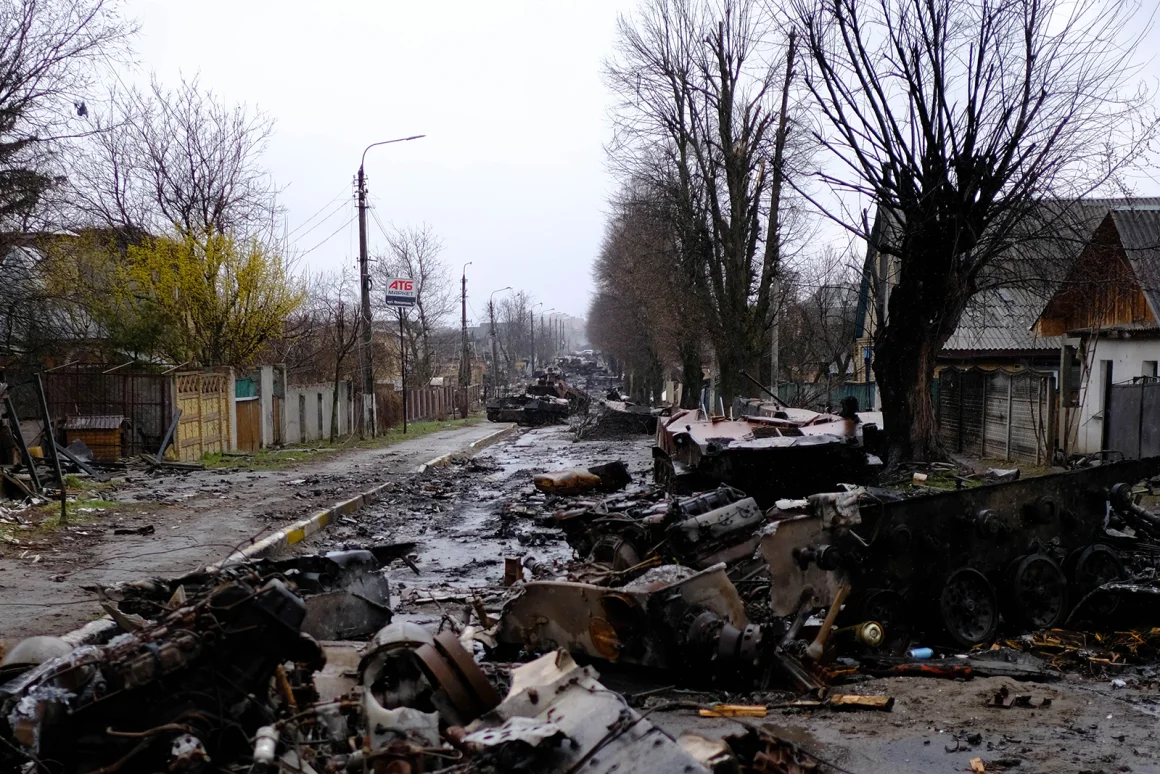
Я бачив танго в знеструмленій Бучі,
у тому квітні, коли не до танцю,
коли вечори холодні й тягучі,
брудні і численні, як війни і шанці.
Я бачив, як він підійшов і мовив:
“Я паску привіз, і скажи, що треба”.
Вона не зронила ні звуку, ні слова,
вона не хотіла ні хліба, ні неба.
Я бачив, як він запитав про ковдри,
про воду, ліхтар і насіння мальви.
Хитнула бровою, що тільки бовдур
повернеться знову, везтиме зайве.
Вона показала у двір рукою,
де двоє котів полювали мишу,
сказала, що гріє вночі собою
обох, аж ніяк не інше.
Коли він спитав: “А чого чекала,
і як розрубати печалі ланцюг?”,-
сказала: “Танго під Bella ciao
в знеструмленій Бучі, коли не до танцю”.
~
I saw them tango in that danceless April,
In Bucha stripped of light, deprived of power,
When countless evenings rolled by like a war reel,
Like endless trenches, dirty, cold, and dour.
I saw how he came up to her and asked her:
“I brought you paska*, tell me what is needed,”
Yet not a sound, not a word she uttered.
Neither for bread nor skies above she pleaded.
I saw him ask her if she needed blankets,
Some bottled water, malva seeds or flashlights.
With knitted brow, she said: such useless trinkets
Only halfwits would bring to this forsaken place.
She pointed through the door toward the courtyard,
Where two tomcats pursued a scared mouse.
She said she had to warm them close to her heart,
While sleeping in a dark and freezing house.
How could he break her chain of sorrows now?
What was she waiting for in this dark hour?
We’ll dance, she said, that tango — “Bella Ciao”
In danceless Bucha stripped of light and power!
* “Paska” is a traditional Ukrainian Easter cake.