I have never written with the reader in mind.
Yet I have always written in pursuit of understanding.
These are different things. The desire to be understood and the desire to be understandable are opposing forces. The former demands tension; the latter, concession. The former drives one deeper into meaning; the latter simplifies form.
I do not know how to simplify. Nor do I wish to.
Literature is an exceedingly complex phenomenon. It resembles a field where intuition, experience, language, and a multitude of external voices collide.
I listen to these voices, not because I seek confirmation, but because reflection is impossible in isolation.
But the final decision is always made by something else – that tense, almost electrical field of intuition that arises within the text.
The text is physiology.
It cannot be constructed according to a plan. It can only be grown, like a crystal. Sometimes it is born from a single scene, as from an embryo.
This is how it happened, for example, with the novel Ai-Petri. First, the ending appeared: torn milk packets, the black maw of a wolfhound, the mountain toward which the threads of the funicular stretch, a crawling cabin.
I saw this scene as a summit, as a zenith. And then the entire narrative began to flow rapidly toward it, like rivers to the ocean.
In this sense, a novel always begins at the end.
To write, I must see the text as a whole – still unexplored, yet already existing, like a map of an unknown continent. You know it is there, but you do not yet know its terrain, its rivers, its valleys.
And so begins a long journey – the search for composition, the search for points of tension, the search for those inner forces that hold the whole together.
Composition is the highest mastery of prose.
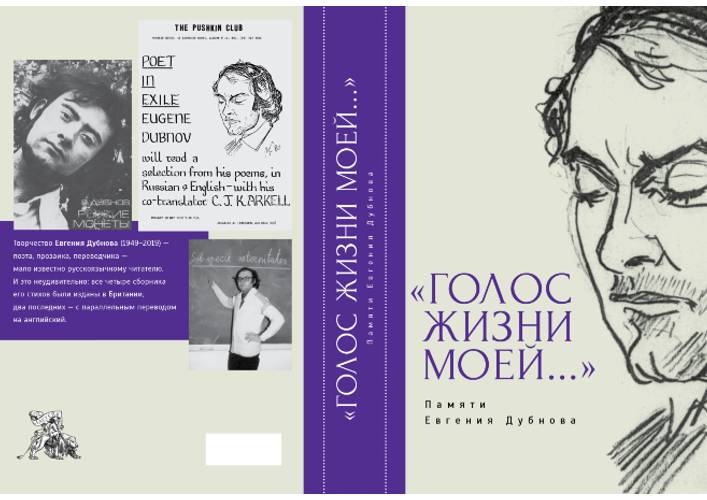
Brodsky said that a poet must learn composition from music. For poetry, this is true. But a novel is neither a concert nor a sonata. It is a symphony of matter. Here it is not enough to rearrange episodes or intensify a motif. At times, one must alter the very fabric of the text – its breathing, its rhythm.
But the real difficulty does not arise in composition.
It arises in metaphor.
Once, metaphor filled the text with flesh. It spread everywhere, like vegetation in a jungle.
With the passing of time, it becomes clear: metaphor must live differently. It must leave the surface and move into the architecture.
Today, metaphor must govern the text.
It must be located at nodal points, where meaning undergoes a phase transition; where the metabolism of the text shifts. As in nature: the melting point, the boiling point, the point of maturation. The moment when the caterpillar is destroyed by the butterfly.
It is there that new meaning is born.
Metaphor is not ornament.
Metaphor is the organ of sight.
It works in the same way as a bee. To gather a kilogram of honey, a bee makes millions of flights between flowers. Each flight is a comparison. Each comparison is a flash of meaning. From these flashes, a world gradually assembles.
Therefore, metaphor must not be excessive.
It must be the root.
Sometimes a single such metaphor is enough for the text to begin to breathe. Sometimes there are several, and then the text seems to reproduce itself at critical points. It grows, branches, changes direction – like a living organism.
But at this moment, another strange thing happens.
The author begins to disappear.
I am becoming more and more convinced: the author must die within the text. Not abstractly, but personally.
As a director dissolves into the actors, so the writer must dissolve into the elements of the novel. Because the novel is an ocean. And it can be written in only one way: by finding oneself alone in that ocean.
And by struggling.
Writing is a struggle against dissolution, and at the same time a consent to it.
It is a strange movement: in disappearing, you begin to exist more deeply. As if death within the text were becoming the condition for a new birth.
Rebirth through dissolution.
And perhaps it is precisely for this reason that a novel never truly ends. Even when the last line has been written, it continues to become – already within the reader. It shifts its point of existence, displaces the coordinates of experience.
This is how the elements of the text live.
And if the metaphor has truly worked; if it has become that seed from which the entire world of the work has grown, then the novel begins to breathe.
And when the text breathes, it no longer belongs to the author. It belongs to life.